Refrigerator Water Leaking Inside? Clear the Defrost Drain
Water pooling at the bottom inside your fridge? Learn how to clear a clogged defrost drain with warm water and a bulb baster, no wire needed. Step-by-step.
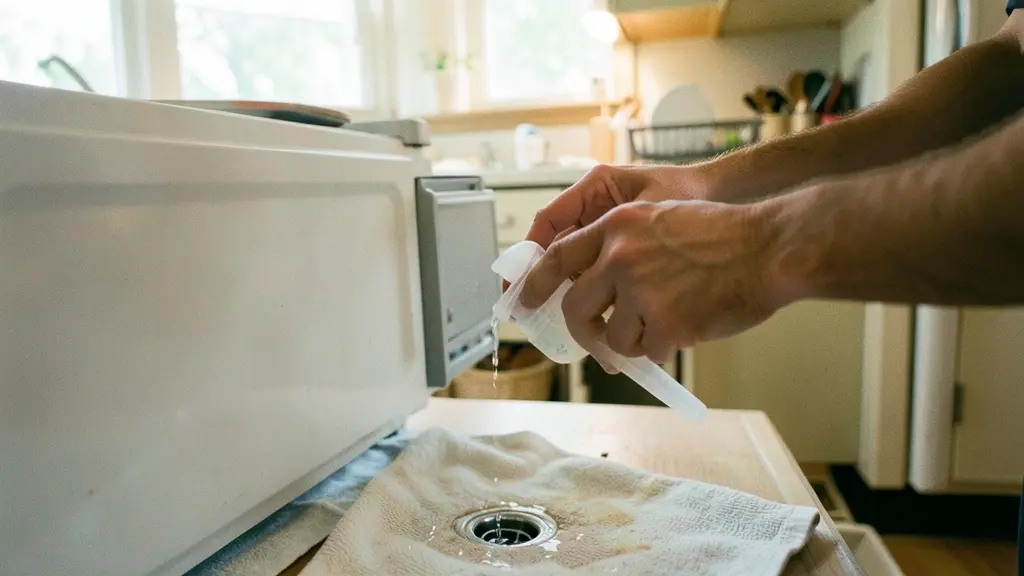
Table of Contents
If water is pooling at the bottom inside your fridge, the defrost drain is clogged more often than not. To clear it, unplug the fridge, empty the freezer, find the small drain hole at the bottom of the back wall, and flush it with 1 to 2 cups of warm water (100–120°F) using a bulb baster or a large syringe. Do not poke it with wire.
Most people miss this because the leak shows up in the wrong place. The water forms in the freezer, freezes into a sheet of ice, then melts and runs down into the fresh food section or the crisper drawers. The cause sits one compartment above the puddle.
This guide shows you how to find the drain, clear it, and tell when the clog isn’t the real problem.
1. Why a Clogged Defrost Drain Leaks Water Inside Your Fridge
Your freezer’s evaporator coil frosts up as it runs. A few times a day, a defrost heater melts that frost. The meltwater drips into a trough and flows through a small drain tube to a pan under the fridge, where it evaporates.
Food crumbs, ice-maker debris, and a little grease from the freezer can build up in that tube. Once it narrows, meltwater has nowhere to go. It backs up, refreezes on the freezer floor, and eventually seeps out and runs down the back wall.
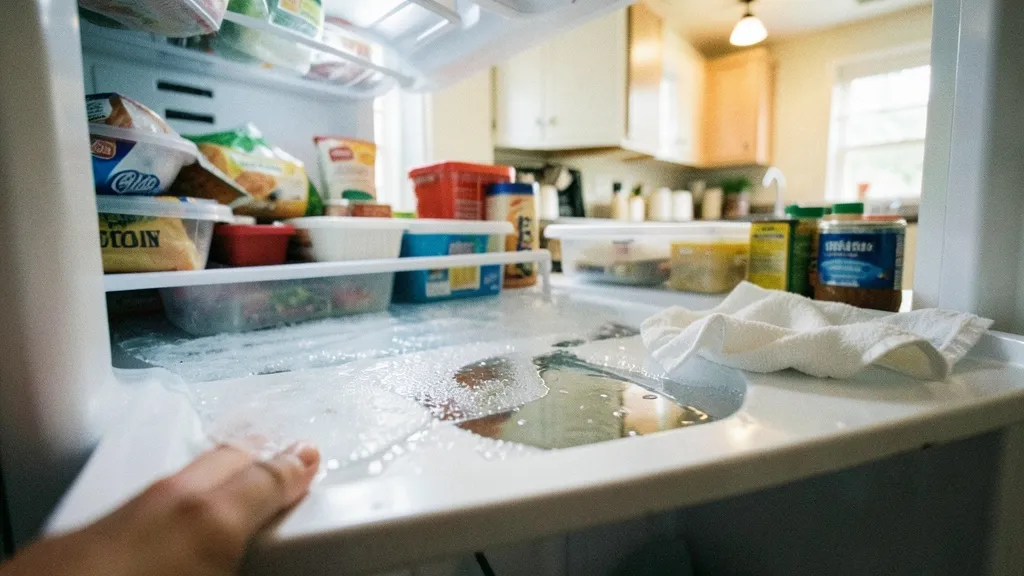
Common signs you’re dealing with this clog:
- Water or ice on the freezer floor, usually at the back
- Puddles under the crisper drawers or along the bottom back of the fresh food section
- Water that returns within a day or two of wiping it up
- Frost sheets on the back wall of the freezer
- A musty smell from standing water
Some models also have a second, smaller drain hole low on the back wall of the fresh food side. Same idea, same fix. Check your owner’s manual for the drain locations on your model.
2. How to Clear a Clogged Defrost Drain, Step by Step
Plan on 30 to 60 minutes of hands-on time. If a lot of ice has built up, you’ll also need several hours for it to thaw.
- Unplug the fridge. You’ll be working near the evaporator fan and wiring. Move perishables to a cooler. Frozen food is fine for 4 hours or so if you keep the freezer door shut until you’re ready.
- Empty the freezer floor area. Pull the drawers and shelves. Lay old towels on the floor under the door.
- Remove the rear panel. The back wall of the freezer is usually a plastic or metal evaporator cover held by 2 to 6 screws (often 1/4-inch hex or Phillips) or by clips. Lift it out gently. Look for the cover’s retaining tabs before you pull.
- Melt any ice. If the drain is buried in ice, leave the doors open for several hours. You can speed it up with a hair dryer on low, held at least 6 inches from the plastic and kept moving. Don’t use a knife, ice pick, or screwdriver on the ice.
- Find the drain hole. It’s a small opening, roughly 1/4 to 1/2 inch wide, in the trough at the bottom center of the back wall. A flashlight helps.
- Flush it with warm water. Fill a bulb baster (a turkey baster works fine) with water at 100–120°F. Squirt it firmly into the hole, 1 cup at a time. Keep warm water to 120°F or below, since boiling water can warp the plastic tube and trough.
- Check that it flows. Pour about 1 cup of water into the trough. It should drain in a few seconds. If it pools or drains slowly, flush again.
- Reassemble and restart. Reinstall the panel, put the shelves back, and plug the fridge in. Check again after 24 hours.
Rule of thumb: Warm water, gentle force, and patience. Never force a rigid object down the drain tube.
The syringe trick for stubborn clogs
A baster doesn’t always seal well on a narrow hole. A large oral syringe (60 mL, sold at most pharmacies without a needle) gives you a stronger, more focused jet.
For a very narrow opening, slip a 3 to 4 inch piece of soft vinyl or aquarium airline tubing over the syringe tip. Push the tubing gently into the hole until it stops, then flush with 2 to 3 syringes of warm water mixed with a few drops of dish soap. A 50/50 mix of white vinegar and warm water also helps with slimy buildup. Finish with a plain-water rinse.
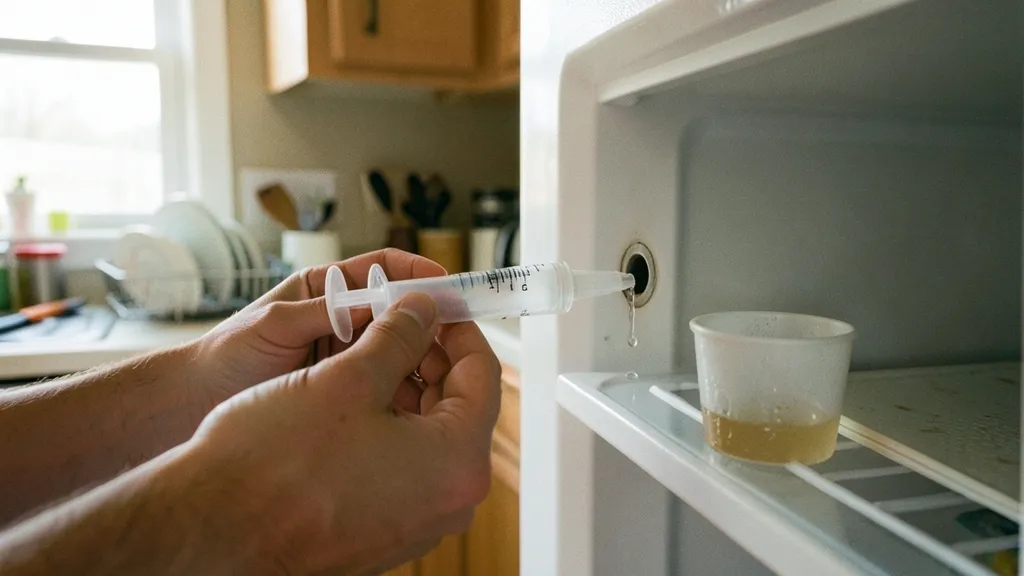
If you stick with a baster, a pipe cleaner can help loosen debris at the opening. Don’t push it deep.
Don’t forget the drain pan
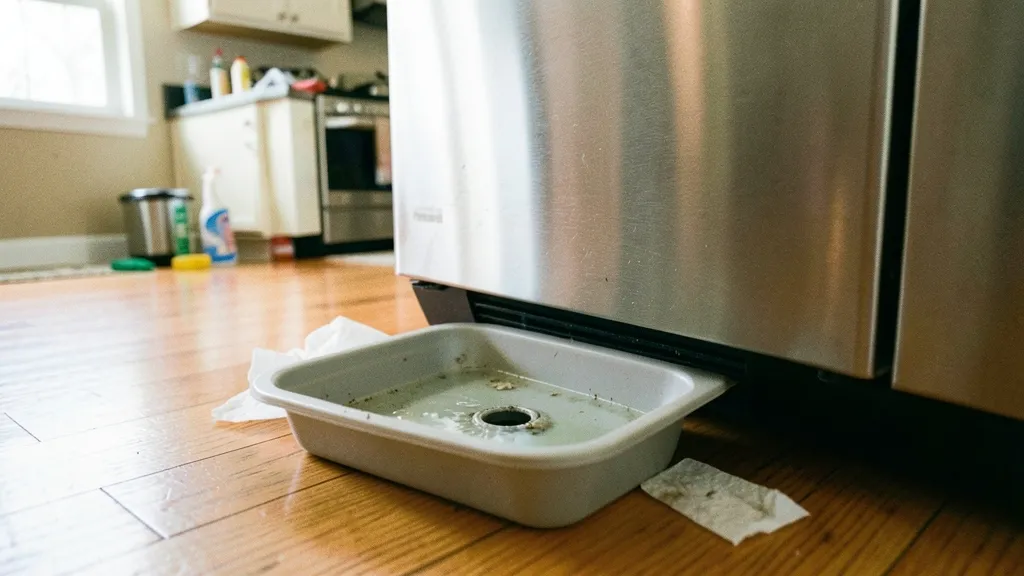
The water ends up in a shallow pan under the fridge, usually reached from the back or behind the front kick grille. Slide it out, dump the water, and wash it with warm water and a little dish soap. A pan full of grime can smell sour and, if overfilled, drip onto the floor.
3. Quick Diagnosis Table: Leak Symptoms and Fixes
| Symptom | Likely cause | What to do |
|---|---|---|
| Ice sheet on freezer floor, water below | Clogged defrost drain | Thaw, flush with warm water, retest |
| Water under crisper drawers only | Clogged fresh food drain hole | Flush the small hole at the back bottom |
| Drain flows fine, ice returns in days | Defrost heater, sensor, or board issue | See the defrost-failure section below |
| Water on floor in front of the fridge | Full or cracked drain pan | Empty, clean, inspect the pan |
| Ice only around the ice maker or fill tube | Frozen water fill line | Thaw the frozen fill tube |
4. Mistakes That Make It Worse
- Using a wire or coat hanger. A stiff wire can puncture or scratch the plastic tube and gouge the rubber valve at the end. It also tends to pack debris deeper instead of clearing it. A scratched tube catches new gunk faster, so the clog returns within weeks. Stick with water pressure and a soft pipe cleaner.
- Pouring boiling water. It can warp the drain trough and loosen the tube connection. Keep the water at 120°F or below.
- Chipping ice with a knife or screwdriver. The evaporator coil and wiring are right behind that ice. A puncture can cause a refrigerant leak, which is not a DIY repair.
- Skipping the unplug step. The fan and defrost heater sit behind that panel. Always unplug first.
- Not looking at the cause. If you flush the drain but the door gasket is torn or the door is cracked open, humid air keeps feeding the frost. Check the seal with a dollar bill: it should hold when the door is closed on it.
5. When the Drain Isn’t the Real Problem
If the drain flows freely and water or ice comes back within a week, the defrost system may not be melting frost at all. The usual suspects are a failed defrost heater, a bad defrost thermostat or sensor, or a control board. Testing these means working around electrical parts, so call a licensed appliance technician if you’re not comfortable with a multimeter.
A warm fresh food section with a freezer that stays cold is another clue that frost is blocking airflow. Frigidaire refrigerator warm but freezer is cold covers that pattern. If your Samsung shows a defrost-related code, read why the Samsung 22E error keeps coming back after defrost.
Small leak at the water dispenser instead? A loose filter can cause that. Here’s how to replace a Whirlpool refrigerator water filter so it seats and seals correctly.
For prevention, flush the drain with a cup of warm water every 6 months, and clean the drain pan at the same time. Make it part of your spring and fall chores, so you’ll catch buildup before it backs up.
Frequently Asked Questions
Can I use a plumber’s snake or straightened wire to clear the defrost drain?
No. Rigid tools can puncture the tube, scratch it, or damage the rubber valve at the bottom. Scratches then trap debris and the clog returns quickly. Use warm water, a bulb baster or syringe, and a soft pipe cleaner at the opening only.
How long does it take for the drain to work again after I clear it?
The drain itself works the moment water flows freely, usually within a few seconds of flushing. But leftover ice on the freezer floor needs time to melt, anywhere from a few hours to a full day. Check again after 24 hours of normal running.
Is a vinegar flush safe for the drain tube?
Yes, in moderation. A 50/50 mix of white vinegar and warm water is safe for the plastic drain tube and helps with slimy buildup. Flush with plain warm water afterward. Avoid harsh drain cleaners and bleach, since they can damage plastic parts and leave fumes inside the fridge.
You might also like
Hand-picked suggestions based on what you are reading
Whirlpool Washer F8 E1 Code: Low Water Flow Fix Guide
Whirlpool washer F8 E1 code means water is filling too slowly. Check valves, hoses, and inlet screens step by step, and learn when to call a pro.
Keurig Only Brewing Half Cup of Coffee? How to Fix It
Keurig only brewing half cup of coffee? Clear the needles, prime the water line, and descale with 1:1 vinegar in 30 minutes. Step-by-step fix inside.
How to Reset Electric Water Heater Red Reset Button Safely
Learn how to reset an electric water heater red reset button safely: breaker off, verify no power, press once, and know when to call a licensed pro.