Bosch Dishwasher E24 Error: How to Clean the Drain Pump
Bosch dishwasher E24 error? Cut power, clean the filter and drain pump, check the hose and disposal knockout plug, and learn when to call a pro. Start here.
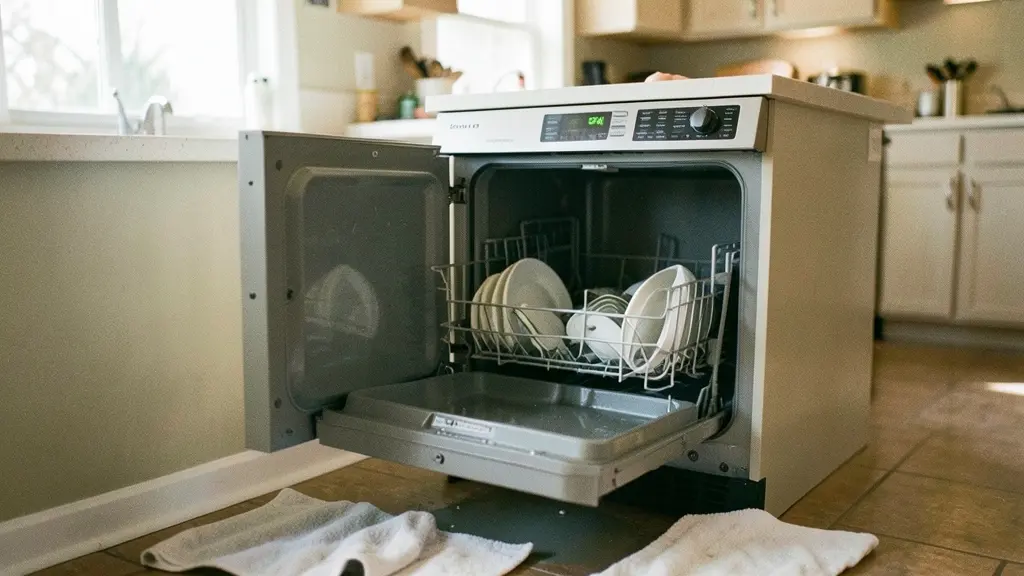
Table of Contents
A Bosch E24 error means the dishwasher can’t push water out of the tub. In most cases, you fix it by cutting power, pulling the filters, clearing debris from the drain pump area, and checking the drain hose and disposal connection. Plan on 20 to 30 minutes and a few towels.
The usual mistake is blaming the control board or replacing the pump first. Most E24 faults come from a clogged filter, a glass shard or fruit pit in the pump chamber, a kinked hose, or a disposal knockout plug that was never removed. This guide walks you through those checks from easiest to most involved, and tells you when the pump itself is the problem and it’s time to call a pro.
1. What E24 Actually Means on a Bosch Dishwasher
E24 is a drain fault. The control senses that water isn’t leaving the tub within the expected time, so it stops the cycle and flashes the code. Some models show it as “E:24.”
The cause is almost always one of four things:
- Clogged filter or sump: food, labels, and grit pack the filter and block the drain path.
- Foreign object at the drain pump: broken glass, cherry pits, olive pits, or toothpicks jam the pump opening.
- Kinked or blocked drain hose: the hose gets crushed behind the unit or filled with sludge.
- Disposal knockout plug still in place: after a new garbage disposal install, a plastic plug inside the dishwasher inlet can block the water completely.
Some models list E25 for a blocked drain pump. If you see it, the steps below still apply. Check your manual for the exact meaning on your model.
Rule of thumb: If a dishwasher that used to drain well suddenly throws E24, start with the filter and pump chamber. If it has never drained properly since a disposal or sink install, check the knockout plug and hose first.
2. Prep Work: Power Off, Towels Down
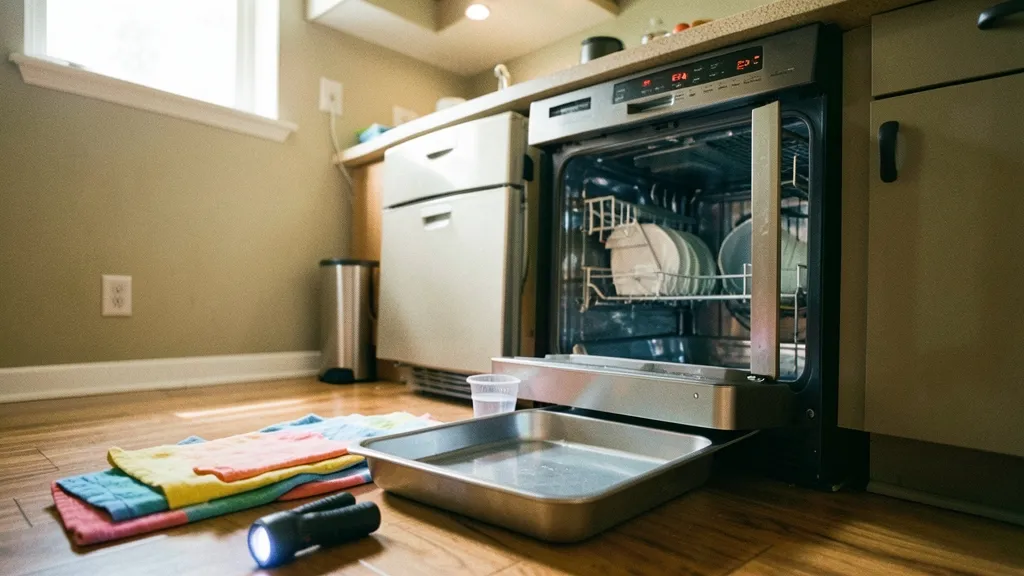
Standing water is the main reason this job gets messy. Set up before you open anything.
- Cut power. Many dishwashers are hardwired, and others plug into an outlet under the sink. If it’s hardwired or you’re not sure, switch off the dedicated breaker (usually 15 or 20 amps). Don’t rely on the Start button.
- Lay down 2–3 towels across the floor in front of the door.
- Grab a shallow baking pan or casserole dish, a small cup or ladle, a sponge, a flashlight, and an old toothbrush. A wet/dry shop vac makes the water step faster but isn’t required.
- Expect water. A failed drain can leave anywhere from a cup to a few quarts in the tub.
3. How to Clean the Drain Pump on a Bosch Dishwasher for an E24 Error
Work in this order. Many people never get past step 3, because the filter is the culprit.
- Remove the lower rack and set it aside. Pull the utensil basket too if it’s in the way.
- Bail out standing water. Scoop it into the baking pan with the cup and pour it into the sink. Sponge the last bit. Wear gloves, since this water is greasy and can hold sharp bits.
- Pull the filters. On most Bosch models, twist the cylindrical coarse filter counterclockwise about a quarter turn and lift it out. Then lift out the flat micro-mesh filter beneath it.
- Wash the filters under warm tap water with a soft brush or old toothbrush. A drop of dish soap is fine. Don’t scrub the fine mesh hard, because it tears.
- Look into the sump with the flashlight. Check for broken glass, fruit pits, toothpicks, bottle label scraps, and shell fragments. Pick them out by hand, and be careful of glass.
- Check the drain pump opening. On many models, a small cover sits over the pump area at the bottom of the sump, and it lifts off by hand once the filters are out. Remove any debris you find. If yours is held by screws or you can’t tell how it releases, stop and check the manual rather than forcing it.
- Check the impeller. With power still off, and only after you’ve removed all visible glass, put on gloves and gently turn the impeller with a fingertip. It should move without grinding or a hard catch. If something is lodged, clear it with needle-nose pliers.
- Wipe the sump, reinstall the micro-mesh filter flat, then the cylindrical filter, and twist it clockwise until it locks.
4. Check the Drain Hose and Garbage Disposal Connection
If the filter and pump area were clean, move to the plumbing under the sink. Keep the dishwasher’s power off and put a small bucket or the baking pan underneath.
The disposal is on its own circuit, so the dishwasher breaker does not shut it down. Before you touch the hose or anything near the disposal inlet, switch off the disposal at the wall, then unplug it under the sink or turn off its breaker. Never put your hand into the grinding chamber.
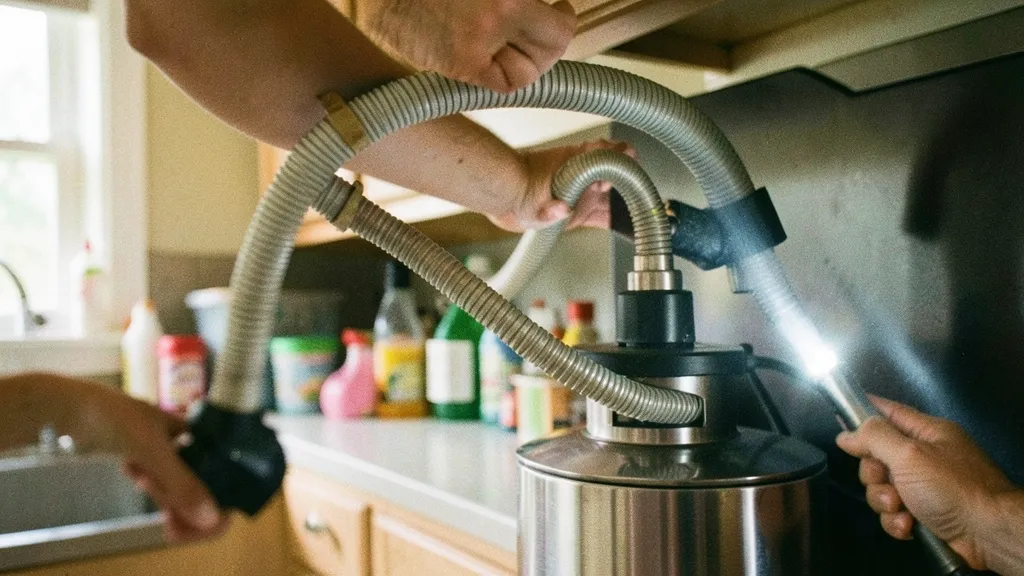
- Look for kinks. Follow the corrugated drain hose from the dishwasher to the disposal or sink tailpiece. Straighten any sharp bends or crushed spots.
- Confirm the high loop. The hose should rise and be secured near the underside of the countertop before it drops to the disposal or air gap. A hose that sags low can let sink water flow back, and it makes clogs more likely.
- Check the air gap, if your sink has one (a small chrome cap beside the faucet). Pull the cap and clear any gunk.
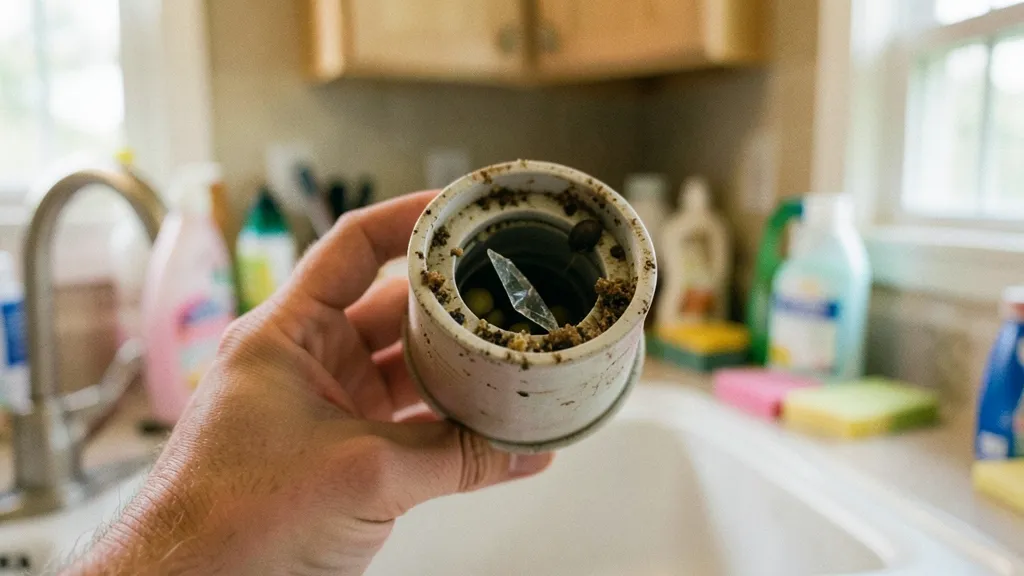
- Check for packed food. With the disposal off and unplugged, loosen the hose clamp and pull the hose off the disposal inlet. If sludge fills the inlet, scrape it out with a spoon handle or grab it with tongs. Don’t use your fingers.
- Check the knockout plug. If a disposal was installed or replaced recently, the inlet may still be blocked by a solid plastic disc. To remove it:
- Confirm the disposal is switched off and unplugged (or its breaker is off).
- Pull the dishwasher hose off the inlet, as above.
- Place a screwdriver against the disc and tap it with a hammer until it drops into the grinding chamber.
- Reach the pieces through the sink drain opening, not by hand. Use a flashlight and needle-nose pliers or tongs to pull out every fragment.
- Run your light around the chamber once more. A leftover chunk can jam the disposal later.
If your disposal also hums or won’t spin, fix that separately with our guide on a garbage disposal humming but not spinning and the hex key reset.
5. Restore Power and Run a Test
- Reattach the hose with the clamp snug, put the lower rack back, and close the door.
- Plug the disposal back in or restore its breaker. Leave the wall switch off for now.
- Turn the dishwasher breaker on or plug the unit back in.
- On many Bosch models, hold Start/Reset for about 3 seconds to clear the error. If your panel is different, cut the breaker for 1–2 minutes and restore it.
- Run a short Rinse cycle with no dishes. During each drain phase, listen for the pump hum and the sound of water moving down the line.
- When the cycle ends, open the door and look at the tub floor and the area around the filter. A thin damp film is normal. A visible puddle or water standing above the filter means it still isn’t draining fully.
If the tub is nearly dry and E24 stays away, you’re done. If E24 returns during the same cycle, or water is still pooled at the end, go back through sections 3 and 4 before assuming a part has failed. For similar drain faults on another brand, our GE dishwasher not draining but no clog guide covers related ground.
6. Quick Reference: Symptom, Cause, Fix
| What you see | Likely cause | What to do |
|---|---|---|
| E24 plus standing water, filter looks gunky | Clogged filter or sump | Clean both filters and the sump |
| Gritty sound or pump hums, then stops | Glass or pit in the pump area | Remove debris, hand-turn the impeller with gloves on |
| E24 right after a new disposal install | Knockout plug still in place | Power off the disposal, remove plug, pull fragments out with pliers |
| Sink also drains slowly | Household drain clog | Clear the sink line first |
| Water gurgles back into the tub | Hose with no high loop or clogged air gap | Secure a high loop, clean the air gap |
| Hose cleared, pump runs but water stays | Failed pump or check valve | Call a licensed appliance technician |
7. Common Mistakes and How to Avoid Them
- Skipping the power cutoff. The control board can stay live with the door open on some models, and the disposal has its own switch and circuit. Cut power to both, not just the dishwasher.
- Pouring in drain cleaner. Chemical cleaners can damage seals and plastic parts, and the liquid sits in the tub. Clean mechanically instead.
- Reaching into the disposal by hand or leaving it switched on. Use tongs or needle-nose pliers through the sink opening, with the disposal off and unplugged.
- Rushing reassembly. Forcing the pump cover can snap a tab, and a filter set in backwards lets debris bypass it. Check the manual if something doesn’t release easily, and make sure the micro-mesh sits flat and the coarse filter locks fully.
8. When to Call a Technician
Call a licensed appliance technician if the drain pump runs but doesn’t push water out. That points to a worn impeller, a failed pump, or a bad check valve, and they’re best handled by someone with the right parts. Also call if the pump is silent, if you see leaks from the pump housing, or if E24 comes back right after you’ve confirmed the hose, filters, and disposal are clear.
Do not work on wiring or the control board yourself. The unit runs on 120V, and those repairs are outside safe DIY limits.
Keep it from coming back: Rinse off glass, pits, and label scraps before loading. Pull and rinse the filters about once a month. If you run a disposal, run it for 15–20 seconds before starting the dishwasher.
Frequently Asked Questions
Can I just reset a Bosch E24 error without fixing anything?
You can clear the code by holding Start/Reset for about 3 seconds or flipping the breaker for 1–2 minutes. If water is still sitting in the tub, though, the error will return as soon as the cycle tries to drain. Clean the filter, pump area, and hose first, then reset.
How often should I clean a Bosch dishwasher filter?
Pull and rinse the filters about once a month for normal use. If you run the dishwasher daily or rarely scrape plates, check every two weeks. Any time you break a glass in the tub, remove every shard from the sump right away.
Does E24 mean the drain pump is bad?
Not usually. Clogs and hose problems cause most E24 faults. A bad pump becomes likely only after the filter, pump chamber, hose, and disposal connection are all clear and the pump still runs without moving water out. At that point, a technician should take over.
You might also like
Hand-picked suggestions based on what you are reading
LG Dryer Error Codes Guide: What Each Code Means & Fixes
Decode LG dryer error codes like d80, dE, tE, LE and nP. See what each means, the safe checks to try first, and when to call a pro. Start here.
How to Clean a Dryer Vent Safely: 10-Step DIY Guide
Learn how to clean a dryer vent safely in about 60 minutes with a brush kit and vacuum. Step-by-step, with airflow tests and when to call a pro.
How to Reset Electric Water Heater Red Reset Button Safely
Learn how to reset an electric water heater red reset button safely: breaker off, verify no power, press once, and know when to call a licensed pro.