GE Dishwasher Not Draining but No Clog? 7 Checks to Run
GE dishwasher not draining but no clog? Check the filter, drain hose loop, check valve, disposal knockout plug, air gap, and pump. Follow the steps.
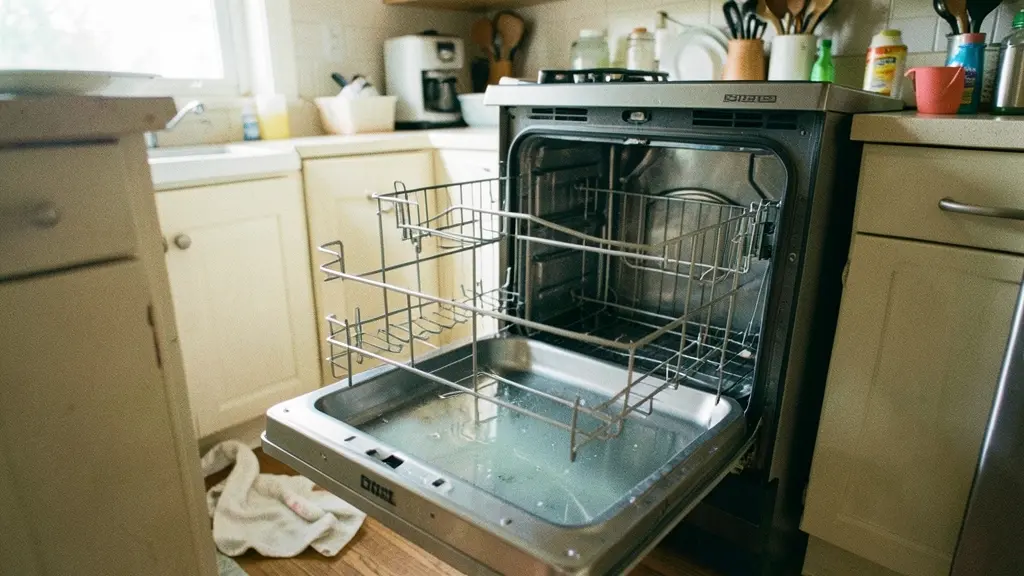
Table of Contents
When a GE dishwasher won’t drain and the sink drain looks fine, the blockage is usually one you can’t see: a packed filter, a kinked or low drain hose, a stuck check valve, or an unopened disposal knockout plug. Work through the checks below in order and you can usually find the cause in 30 to 45 minutes with a flashlight, a screwdriver, towels, and a shallow bowl.
People call it “no clog” because the sink drains and nothing smells. But dishwashers fail at small chokepoints, not in the main line. This guide walks you through each chokepoint, from cheapest to most involved, and shows when the problem is your home’s plumbing rather than the appliance.
Safety first: Turn off the dishwasher’s circuit breaker (most are on a 120V, 15–20 amp circuit) before reaching into the tub or pump area. Wear gloves, because broken glass often hides in the sump.
1. Why a GE Dishwasher Won’t Drain When There’s No Clog
A dishwasher drains in a short path: tub sump, drain pump, drain hose, then the disposal or sink tailpiece. A restriction anywhere on that path leaves water in the tub, even if the rest of your plumbing is fine.
A small film of water in the sump is normal. Water covering the filter area or the bottom of the tub after a finished cycle is not. Bail out what you can with a cup and towels first, so you can see what you’re working on.
The usual non-clog causes, roughly in order of how often they show up:
- Clogged or loose filter: the filter packs with food, grease, and label bits.
- Kinked or low drain hose: the hose sags or gets crushed behind the unit.
- Stuck check valve: a flapper that should only open one way sticks closed.
- Disposal knockout plug: a new or replaced disposal still has its plug in.
- Blocked air gap: the cap on the sink deck fills with sludge.
- Jammed or failed drain pump: glass or a pit jams the impeller, or the motor fails.
2. Step-by-Step: Check the Filter to the Pump in Order
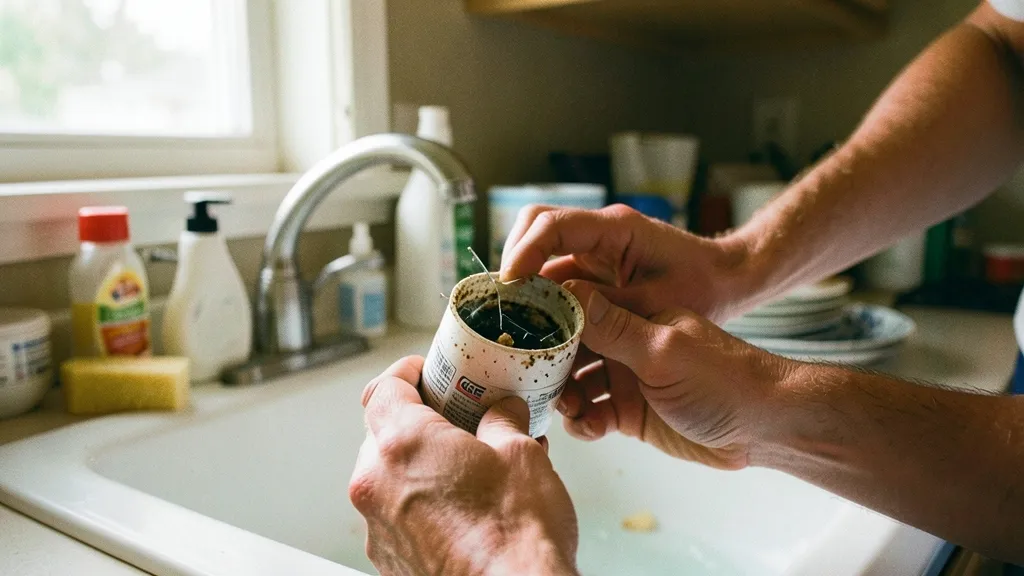
- Clean the filter. Remove the lower rack, then twist out the cylindrical filter (and the fine mesh screen under it, if your model has one). Rinse under warm water and scrub with a soft brush. Pick out glass, toothpicks, and label scraps from the sump. A filter that hasn’t been cleaned in 2–3 months is often the whole problem.
- Check the drain hose for kinks. Slide the dishwasher out only if you can do it without stressing the water line (turn off the water supply first). Look for flattened sections, especially where the hose bends behind the unit. Straighten any kink. A hose crushed flat needs replacing.
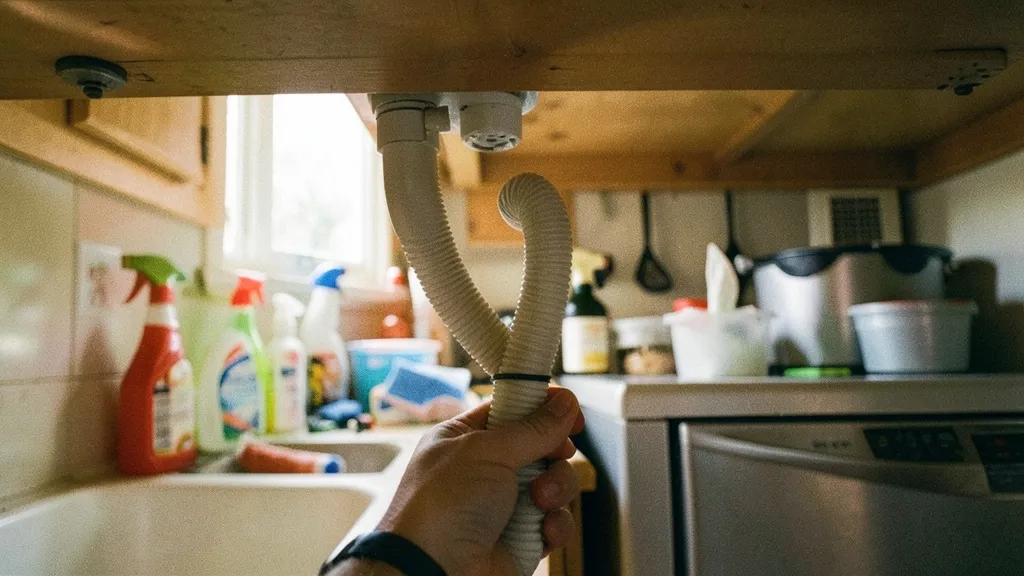
- Confirm the high loop. Under the sink, the drain hose should rise to the underside of the countertop (roughly 20 inches or more above the floor) and be secured there. A hose that sags low lets dirty sink water flow backward into the tub. Re-hang it with a zip tie or bracket.
- Inspect the check valve. Many GE models have a check valve (a flapper) at the pump outlet or in the hose connection. Check your model’s parts diagram to find it. Pull the hose end and make sure the flapper swings freely. Rinse out any gunk. A stuck flapper traps water in the tub.
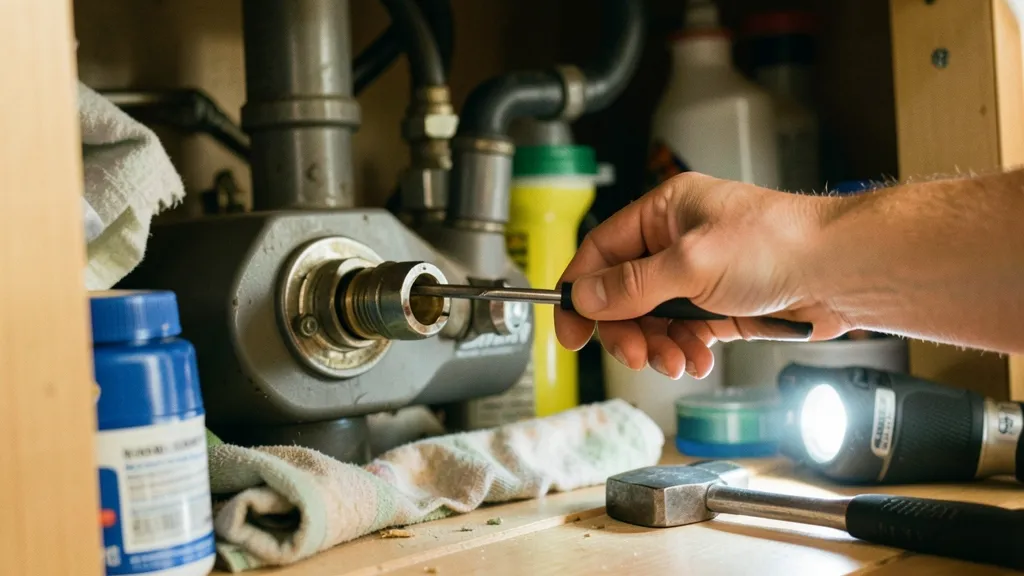
- Check the disposal knockout plug. If you recently installed a new garbage disposal, the dishwasher inlet has a plastic plug that must be removed. Disconnect the hose from the inlet, then tap the plug out with a screwdriver and hammer. Fish the plug out of the disposal chamber so it doesn’t jam the blades.
- Clean the air gap. If your sink has a small cylinder next to the faucet, pop the cap off and clear the sludge with a small brush or pipe cleaner. Some US installations have one and some don’t, so skip this step if you don’t see one.
- Test the drain pump. With the power off and the filter and sump cover removed, shine a light into the pump area. Spin the impeller by hand. It should turn with light resistance and no grinding. Remove any glass or debris. If the impeller turns freely, the pump motor may be the failure.
3. Run a Drain-Only Cycle to Test Your Fix
Once you’ve cleaned something, test it without running a full wash. On many GE models, pressing and holding Start/Reset for about 3 seconds cancels the cycle and triggers a drain. Some models have a dedicated Cancel Drain or Drain pad, so check your manual for the exact sequence.
Restore power and listen. A steady pump hum for 30–60 seconds with water leaving the tub means the path is clear. If the pump hums but water stays put, the blockage is still in the hose, check valve, or disposal. If you hear nothing at all, the pump motor or control board may be at fault.
4. Quick Reference: Symptom, Likely Cause, Fix
| Symptom | Likely cause | What to do |
|---|---|---|
| Water drains slowly, tub smells | Packed filter | Remove and scrub filter and sump |
| Water drains only after you run the disposal | Knockout plug still in, or disposal clogged | Remove plug; run disposal clear |
| Sink water backs into dishwasher | Low drain hose or clogged air gap | Restore high loop; clean air gap |
| Pump hums, no water leaves | Jammed impeller or stuck check valve | Clear debris; free the flapper |
| Dead silence at drain time | Failed pump motor or control issue | Test fuse/power; call a technician |
| Gurgling in sink and washer drain | House drain line problem | Call a plumber |
For similar steps on another brand, our guide to cleaning the drain pump on a Bosch dishwasher covers the same sump and impeller access.
5. When It’s Your House Plumbing, Not the Dishwasher
A GE that drains fine on its own but backs up whenever the sink is used points to your drain line. Run the sink test: fill one side of the kitchen sink with 3–4 inches of water and release it. If water rises in the dishwasher or the sink drains slowly, the clog is downstream of the disposal.
Other signs it’s the home’s line:
- Gurgling from other drains when the dishwasher runs.
- A washing machine drain that also backs up or burps.
- A garbage disposal that fills with water and won’t clear.
If the disposal itself is stuck, see our guide on a garbage disposal that hums but won’t spin. A recurring backup across several fixtures is a job for a plumber with a drain snake or camera.
6. Common Mistakes and How to Fix Them
- Pouring strong drain cleaner into the tub. Lye and acid products sit in standing water, can attack rubber seals and plastic fittings, and splash when you open the door. Skip them. If you’ve already used one, wear gloves and eye protection, ventilate the kitchen, and bail the water out carefully.
- Running cycle after cycle hoping it clears. Each cycle adds more dirty water to a tub that can’t empty. Stop after one failed drain, then start the checks.
- Replacing the pump first. Pumps get blamed for filter, hose, and knockout plug problems. Check the free items first, because a pump is the most expensive and most involved part on the list.
- Working with the power on. Always shut off the breaker before reaching into the sump or pump area.
- Forgetting the knockout plug after a disposal swap. If the problem began right after a new disposal was installed, check this first.
Rule of thumb: If the filter, hose loop, check valve, and plug are all clear and the pump hums but won’t move water, stop and call a licensed appliance technician. Pump motors and control boards aren’t a good place to experiment.
Frequently Asked Questions
Why is my GE dishwasher full of water but not draining?
Most often, a clogged filter, a kinked or low drain hose, or a stuck check valve is blocking the exit path. A disposal with an uncut knockout plug is another common cause after a new installation. Check those in that order before suspecting the pump.
Can a garbage disposal cause a dishwasher not to drain?
Yes. A clogged disposal or an uncut knockout plug blocks the dishwasher’s path out of the tub. Running the disposal with water for 20–30 seconds can clear a food blockage. If water backs into the tub, check the plug and the sink drain next.
How do I know if the GE dishwasher drain pump is bad?
Cut the power, remove the filter and sump cover, and spin the impeller by hand. If it’s jammed with glass or debris, clear it. If it spins freely but the pump is silent or only hums during drain, the motor has likely failed and needs a technician or replacement part.
You might also like
Hand-picked suggestions based on what you are reading
Samsung Top Load Washer 5C Code: No Drain Filter Fix
Samsung top load washer 5C code and no drain filter to check? Work through the drain hose, standpipe, pressure hose, and bucket drain to find the cause.
LG Dryer nP Code but Breaker Not Tripped: What to Check
LG dryer showing nP but the breaker isn't tripped? See how a double breaker fails halfway, how to reset both poles, and when to call an electrician.
How to Flush Electric Water Heater Sediment (Step by Step)
Learn how to flush electric water heater sediment with a garden hose in about an hour. Breaker off first, never heat a drained tank. Follow the steps.