Refrigerator Water Dispenser Not Working but Ice Maker Works
Refrigerator water dispenser not working but ice maker works? Check the filter, lock, frozen line, and valve in order. Step-by-step fixes for beginners.
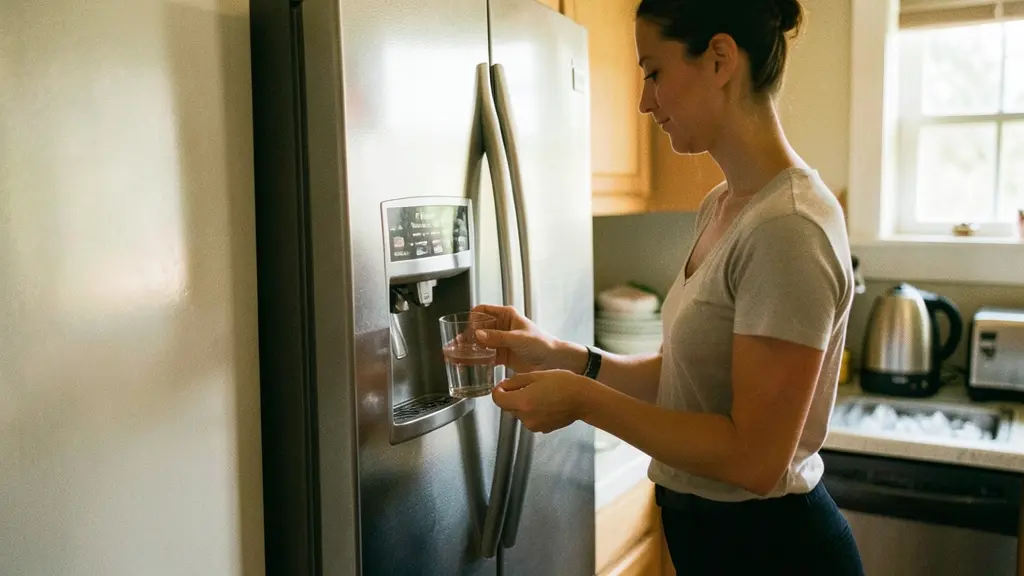
Table of Contents
When your refrigerator water dispenser is not working but the ice maker works, the cause is usually one of four things, checked in this order: a clogged water filter, an engaged dispenser lock, a frozen water line, or a weak water inlet valve. The filter is the culprit most often, and testing it takes about five minutes.
This happens because the ice maker and the dispenser draw water differently. The ice maker fills a small tray slowly on a timer, so it tolerates low flow. The dispenser needs a steady stream the moment you press the paddle, so any restriction shows up there first.
This guide walks you through each check in order, with what to look and listen for, so you can fix it yourself or know exactly when to call a technician.
1. Why the Ice Maker Works When the Water Dispenser Doesn’t
Most home refrigerators send water from your house line through one inlet valve, then through the filter, and on to the dispenser tube in the door. The ice maker gets its own short fill line. On many models the filter feeds both lines, which is why a partly clogged filter can leave you with ice but only a dribble of water.
Three other things can block the dispenser alone:
- A lock setting. The control panel can switch off the dispenser without touching the ice maker.
- A frozen dispenser line. The tube running through the door sits in a colder spot and can ice over while the ice maker’s fill tube stays clear.
- A weak or failing valve. The valve has separate coils for the ice maker and dispenser on many models, and one can fail while the other keeps working.
Water pressure matters too. Most manufacturers call for roughly 20 to 120 psi at the fridge, but check your manual for the exact range on your model.
2. Step-by-Step: Check in This Order
Work through these in sequence. Each step is cheap or free, and it rules out one cause before you move on to the harder ones.
Step 1: Rule Out a Clogged Water Filter
If the filter is more than 6 months old, start here. Hard water, well water, and heavy sediment can clog a filter well before 6 months.
- Look at the filter date or indicator light. A “replace filter” light or a filter older than 6 months is a strong hint.
- Remove the filter. Most twist a quarter turn or pull straight out. Put a towel under it, since a little water will drip.
- Install the bypass cap if you have one. Many fridges come with a plastic bypass plug, and some models don’t have one.
- Press the dispenser for 10 to 15 seconds. If water now flows strongly, the filter was the problem.
- Install a new filter. For brand-specific steps, see this guide on how to replace a Whirlpool refrigerator water filter.
Flush after every filter change. Run about 1.5 to 2 gallons of water through the dispenser before you drink it. That clears trapped air and loose carbon dust. Expect sputtering and cloudy water at first, which is normal.
A quick way to flush: fill a 1-gallon jug twice, pausing between fills. It can take 10 minutes or more, so don’t stop when the first cup comes out clear.
Step 2: Check the Dispenser Lock and the Door
This takes 30 seconds and fixes more calls than you’d expect, especially in homes with kids or pets.
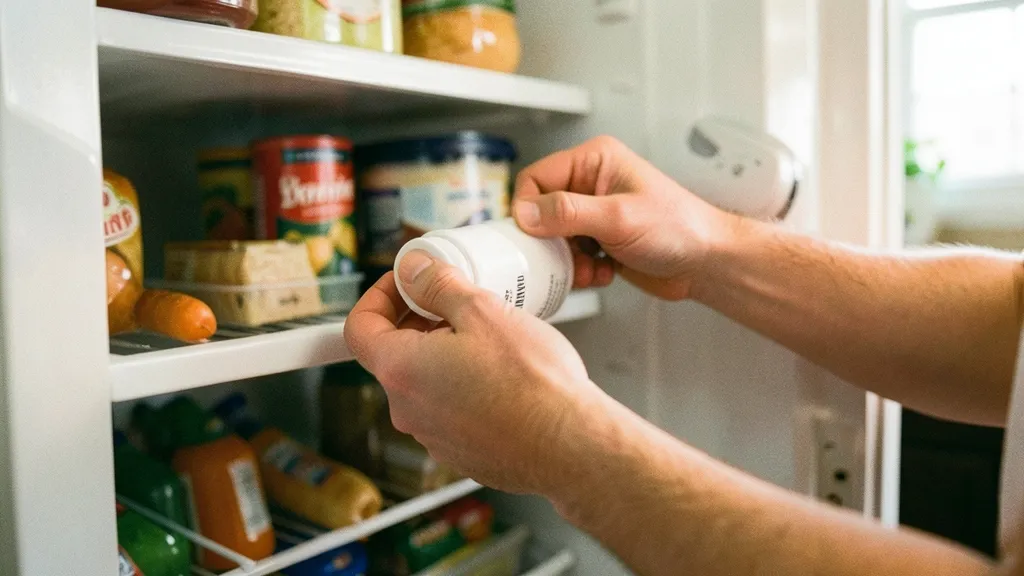
- Look for a lock icon or “Lock” light on the dispenser panel.
- Press and hold the lock button for about 3 seconds. On many Whirlpool, GE, Samsung, and LG panels this toggles the lock. Your manual shows the exact button.
- Confirm the mode. Make sure the dispenser is set to water, not crushed or cubed ice.
- Close both doors fully. A door that is slightly ajar can disable the dispenser on some models.
Step 3: Look for a Frozen Water Line
If the filter is fine and the lock is off, ice in the dispenser tube is next. The classic sign is a few drops or a slow trickle, then nothing. It is more likely when the fresh-food section runs colder than normal.
- Check your temperatures. The usual targets are 37°F for the fresh-food section and 0°F for the freezer. Anything near 32°F in the fridge side can freeze the line.
- Unplug the fridge. Always do this before working near internal parts.
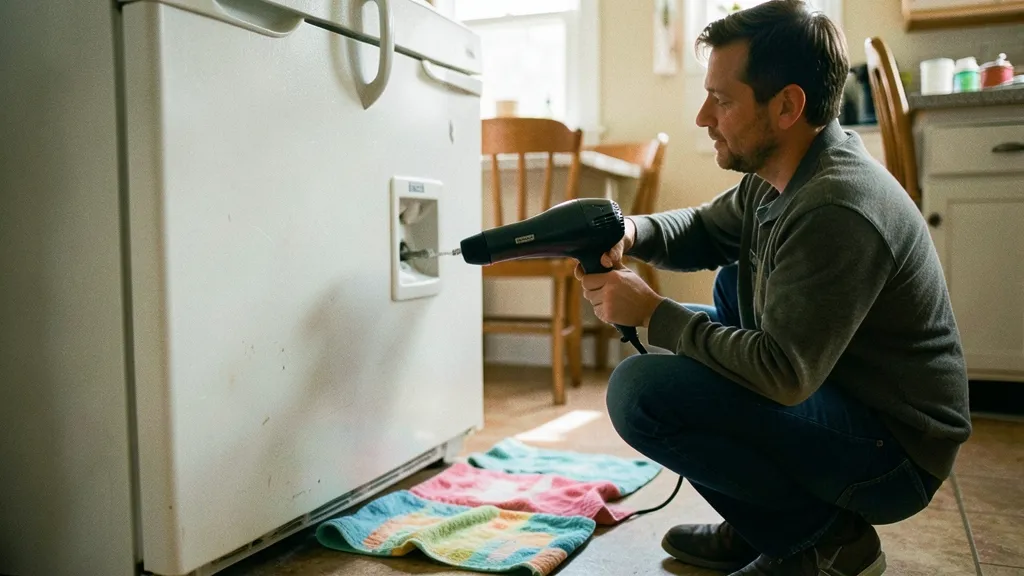
- Lay towels on the floor and let the door area thaw for roughly 4 to 8 hours with the doors open.
- To speed it up, use a hair dryer on low heat. Keep it moving and a few inches from the panel. Never use a heat gun, open flame, or sharp tools, because they can melt the plastic liner or puncture the tube.
- Plug it back in, reset temperatures, and test. Flush a few cups to clear any water left in the line.
If the ice maker’s fill tube is also frozen, this guide on thawing a frozen Whirlpool ice maker fill tube covers that side of the problem.
If you notice water pooling at the bottom of the fridge after the thaw, a blocked drain may be involved. See how to clear a clogged defrost drain.
Step 4: Check the Supply Line and Water Inlet Valve
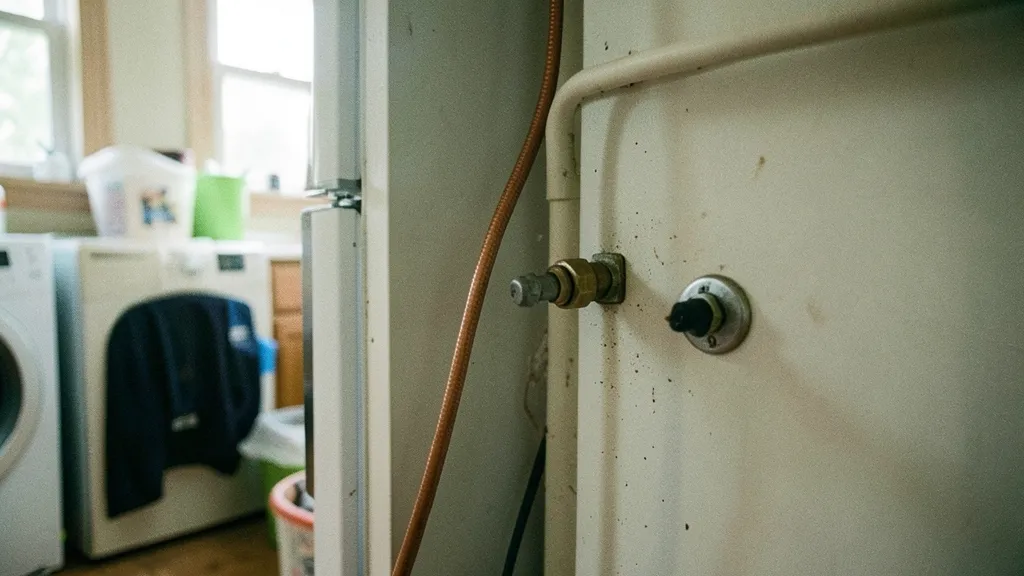
If you’ve reached this step, the problem is behind the fridge. You are looking for either low incoming water or a valve that isn’t opening.
- Do the listening test. Press the dispenser paddle with the kitchen quiet. A hum or buzz from the lower back means the valve is getting power. Silence points to a control or switch issue.
- Check the shutoff valve. Unplug the fridge, pull it out gently, and confirm the wall valve handle runs parallel to the pipe (open).
- Look for kinks. A supply line crushed when the fridge was pushed back is common. Straighten it, and replace it if it is cracked or flattened.
- Test the flow. Hold the supply line over a bucket, open the shutoff slowly, and see whether water runs steadily. This only works if the line disconnects easily.
If the line flows well and the valve hums but still no water comes out, the valve itself may be partly clogged or failed. Replacing it is a manageable job for some people. The valve runs on 120V, so unplug the fridge and close the water shutoff first. If you aren’t comfortable, call a technician.
3. Quick Troubleshooting Table
| Symptom | Likely cause | What to do |
|---|---|---|
| Weak stream or slow trickle | Clogged filter | Swap in bypass cap to test, then replace the filter |
| Nothing at all, display looks normal | Dispenser lock on | Hold lock button about 3 seconds |
| Worked, then slowed, then stopped | Frozen dispenser line | Unplug and thaw; check temps (37°F / 0°F) |
| Sputtering and cloudy water | Air after filter change | Flush 1.5 to 2 gallons |
| No hum when you press the paddle | Door switch, paddle, or control issue | Close doors fully; call a technician if it persists |
| Hum but no water | Failing inlet valve or low pressure | Check supply line and shutoff; consider valve replacement |
4. Common Mistakes & Fixes
- Skipping the flush. New filters trap air, so the first water may spit and taste off. Run 1.5 to 2 gallons before judging the result.
- Assuming a working ice maker means the filter is fine. The ice maker needs far less flow. Always test with the bypass cap or a new filter.
- Using a heat gun or sharp tools on a frozen line. This can damage the plastic. Use unplugged-fridge thawing time and a hair dryer on low heat.
- Forgetting to unplug before touching the back panel. The inlet valve and wiring are 120V. Unplug first, and shut off the water.
- Setting the fridge too cold. Dialing the fresh-food side down to 32°F or lower invites freezing. Stay near 37°F.
5. When to Call a Technician
Call a licensed appliance technician if the valve hums but won’t open, the dispenser paddle feels dead, or the display shows errors. Also call if the line freezes again within a few weeks after thawing, which usually points to a failing control or temperature sensor.
Keep the rule simple: filter, lock, frozen line, valve, in that order. Replace the filter every 6 months and flush 1.5 to 2 gallons each time to head off most of these calls.
Frequently Asked Questions
Why does my fridge water come out as only a trickle?
A trickle usually means a clogged filter, low house water pressure, or a partly frozen dispenser line. Test with the filter bypass cap first. If flow is still weak, check the temperature settings and the supply line behind the fridge for kinks or a half-open shutoff valve.
How long does a frozen refrigerator water line take to thaw?
Plan on roughly 4 to 8 hours with the fridge unplugged and the doors open. A hair dryer on low heat, held a few inches from the panel, can shorten that. Never use a heat gun or open flame. Reset the temperatures to about 37°F and 0°F afterward.
Can I run the fridge without a water filter?
Yes, a bypass cap lets water flow without filtering it. It’s fine for a short test, but you’ll be drinking unfiltered water and may get more sediment in the lines. Replace the cap with a new filter soon, then flush 1.5 to 2 gallons through the dispenser.
You might also like
Hand-picked suggestions based on what you are reading
Dehumidifier Running but Not Collecting Water: 7 Fixes
Dehumidifier running but not collecting water? Check coil frost, a dirty filter, and room temps under 65°F first. Step-by-step fixes and when to replace it.
Samsung Washer UE Code Every Load Even When Level: Fixes
Samsung washer UE code on every load even when level? Check shipping bolts, feet, floor, small loads, and worn dampers with this step-by-step guide.
Electric Water Heater No Hot Water: 7 Checks Before You Call
Electric water heater no hot water? Check the breaker, the red reset button, and the upper element first. Step-by-step safe checks and when to call a pro.