Dehumidifier Running but Not Collecting Water: 7 Fixes
Dehumidifier running but not collecting water? Check coil frost, a dirty filter, and room temps under 65°F first. Step-by-step fixes and when to replace it.
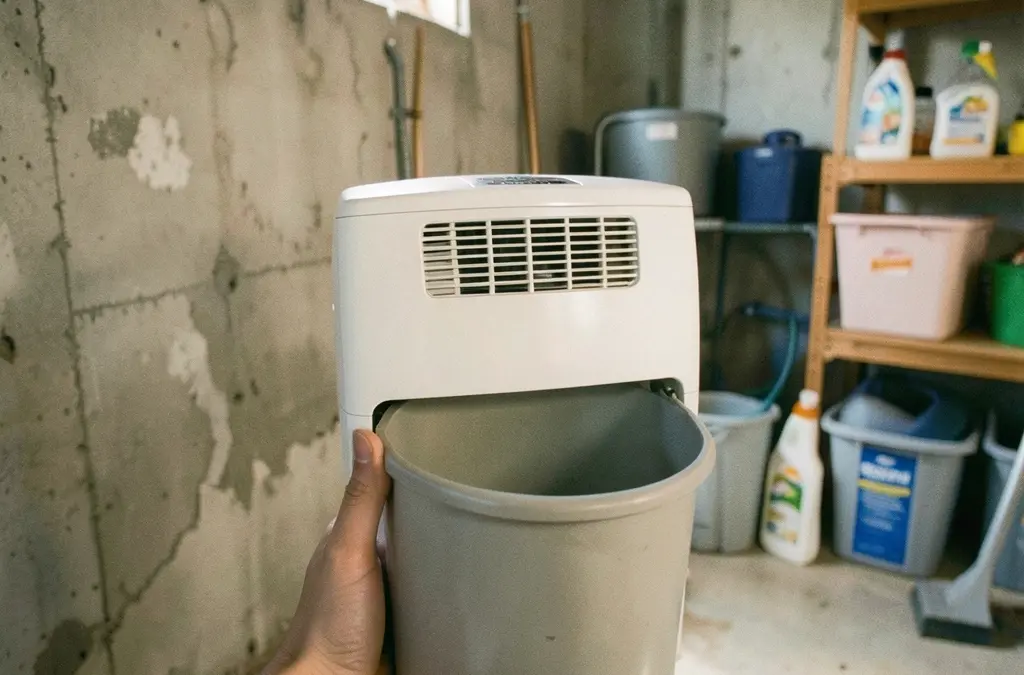
Table of Contents
If your dehumidifier is running but not collecting water, the most likely causes are a room below about 65°F, a frosted coil, or a clogged filter. Unplug the unit, let any ice melt for 2–8 hours, rinse the filter, and set the humidistat to 45–50%. Those three steps fix most “fan on, bucket empty” cases.
Many people assume a quiet bucket means a broken machine. Often the machine is protecting itself from ice, or the room is already dry enough. This guide walks you through the checks in the order that saves the most time, and tells you plainly when it’s time to replace the unit.
1. Why a dehumidifier keeps running but not collecting water
A standard compressor dehumidifier pulls room air across a cold coil. Moisture condenses on the coil and drips into the bucket. Anything that stops the coil from getting cold, or stops air from moving across it, leaves you with a running fan and no water.
Here are the usual causes, from most to least common:
- Room too cold. Below roughly 65°F, the coil can drop under freezing and ice over. Unfinished basements in the Northeast and Midwest hit this every winter.
- Frost-covered coil. Once ice builds up, air can’t pass through. Many models have an auto-defrost mode that switches the compressor off while the fan keeps running, so it looks like it’s working when it isn’t.
- Dirty filter. A clogged filter chokes airflow and encourages frost.
- Humidity already low. Under about 45% RH, there’s little water left to collect.
- Bucket or float problem. A misaligned bucket or stuck float can shut the compressor off.
- Weak or failing fan. Low airflow lets the coil freeze or run ineffective.
- Bad humidity sensor. The unit “thinks” the room is dry and never starts the compressor.
2. Step-by-step fixes you can do today
Work through these in order. Stop when the bucket starts filling.
- Read the room, not the unit. Place a hygrometer in the room. If it reads under 45% RH, nothing is wrong. If it reads 55% or higher and the bucket stays empty, keep going.
- Set the humidistat to 45–50%. Below 40% the unit may rarely run its compressor, and above 55% mold stays comfortable. Start at 45% for a damp basement, 50% for a living area.
- Check the room temperature. If it’s below 65°F, a standard compressor model will struggle. Raise the temperature or move the unit to a warmer space.
- Look for a drain hose. If a garden hose or tubing is attached, water may be draining out of the unit while the bucket stays empty. Check that the hose isn’t kinked and that it drains downhill into a floor drain or sump.
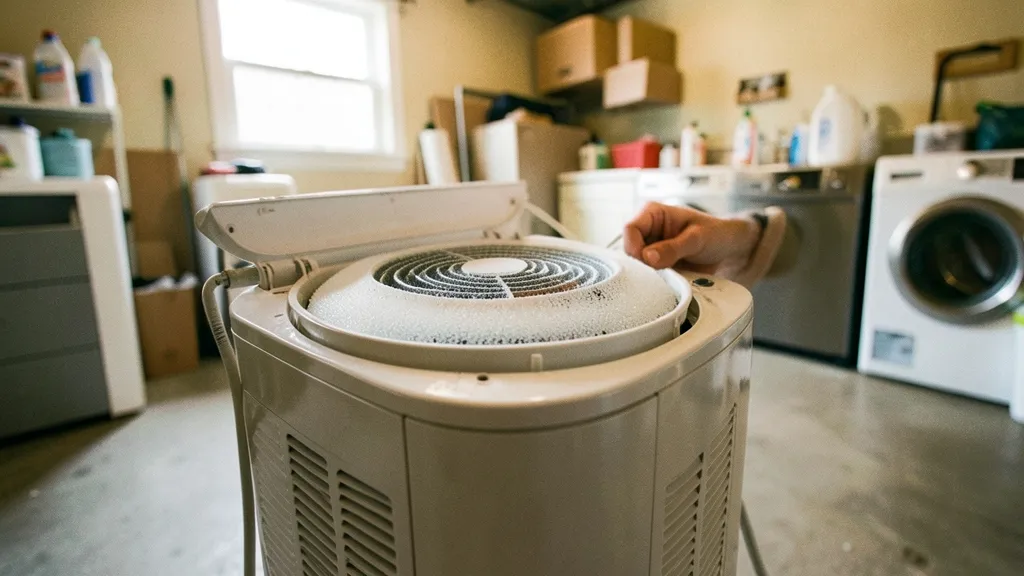
- Check for frost. Unplug the unit, pull the filter, and look at the coil through the back grille with a flashlight. White ice or frost means the coil is frozen. Move to the defrost steps below.
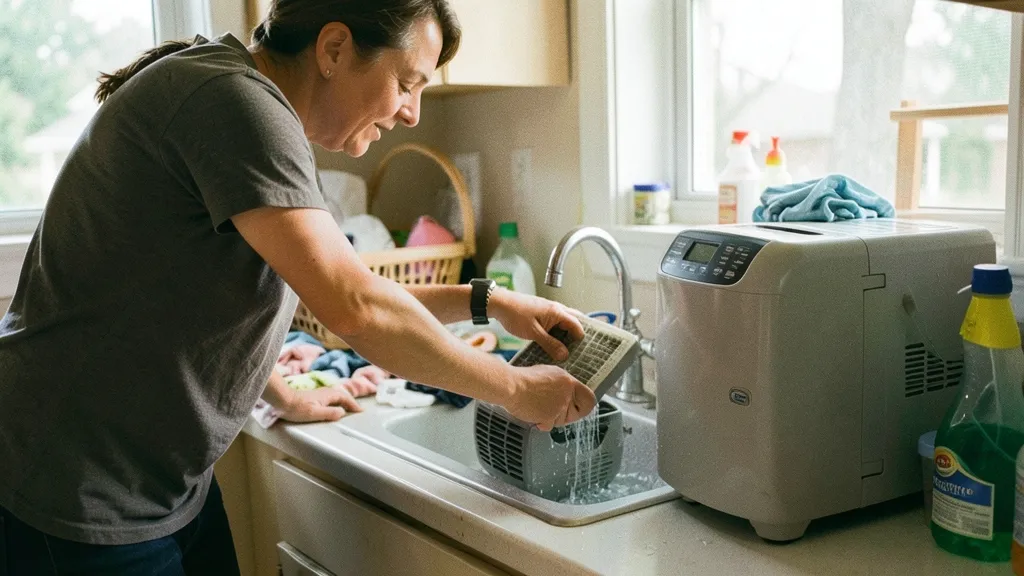
- Clean the filter. Slide it out and rinse it under lukewarm tap water. Let it dry fully before reinstalling. If it’s dusty enough that you can’t see the mesh, it was choking the airflow.
- Test the coil. Plug the unit back in, set it to continuous mode, and wait 15–20 minutes. The coil area should feel cool, and you should see drops or a damp sheen. If the coil stays room temperature, skip to the replacement section.
How to defrost the coil safely
Unplug the unit first. Leave it at room temperature, ideally in a space above 65°F, for 2–8 hours until the ice is gone. A small fan blowing across the open back grille speeds things up. Put towels underneath, since meltwater will drip.
Don’t chip ice with a knife or screwdriver. The coil fins and tubing are thin, and a puncture can release refrigerant, which is not a DIY repair. The patience rule is the same one that works for thawing a frozen ice maker fill tube: let gentle warmth do the work.
Clean the filter and airflow path
Rinse the filter every 2 weeks while the unit runs daily, and monthly in lighter use. Vacuum the intake and exhaust grilles with a brush attachment. Keep the dehumidifier at least 6–12 inches from walls and furniture so air can move freely.
For a deeper clean of the coil and bucket, see our guide on how to clean a dehumidifier coil and filter.
Check the bucket and float
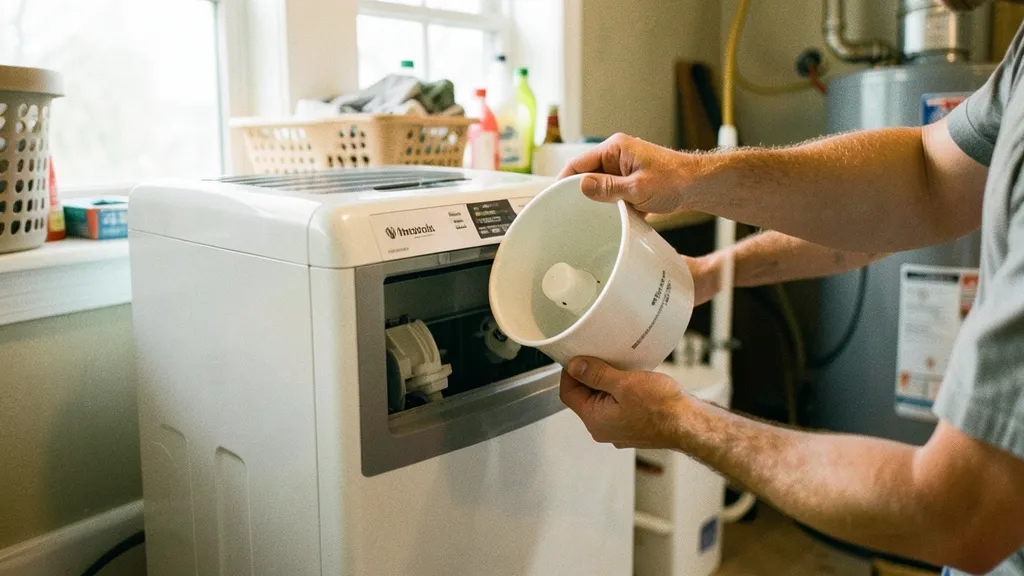
Pull the bucket and look inside the cabinet. You should see a small plastic float or switch near the bucket slot. Make sure it moves freely and isn’t jammed with debris. Reseat the bucket firmly, since a bucket that’s a quarter-inch off can trigger the “full” shutoff and stop the compressor.
3. Quick diagnosis table
| Symptom | Likely cause | What to do |
|---|---|---|
| Fan runs, no water, room under 65°F | Cold room, coil frosting | Warm the room above 65°F or defrost and relocate |
| Visible ice on coil | Frost from low temperature or low airflow | Unplug, defrost 2–8 hours, clean filter |
| Weak airflow from exhaust | Clogged filter or slow fan | Rinse filter, vacuum grilles, check fan spin |
| Bucket empty, hose attached | Water draining out through hose | Check hose and drain, not a fault |
| Room reads under 45% RH | Air already dry | Normal, raise humidistat only if you want it drier |
| Compressor never starts, fan runs | Faulty humidity sensor or bucket float | Test in continuous mode, check float, replace if no change |
| Compressor runs but coil stays warm | Likely sealed-system problem | Replace the unit |
4. Mistakes that keep the bucket empty
- Running it in a cold basement all winter. A standard model isn’t built for sub-65°F rooms. Use a warmer spot, or consider a desiccant model, which handles cold better, if you must dehumidify a chilly space.
- Skipping the filter. A dusty filter is one of the easiest causes to fix and one of the most overlooked. Put a reminder on your phone every 2 weeks.
- Setting the humidistat at 30%. The unit may struggle to reach it and can frost over. Stay at 45–50%.
- Blocking the vents. Pushing the unit against a wall or stacking boxes next to it cuts airflow and encourages ice.
- Leaving doors open. A dehumidifier works best in a closed room. Open doors let it fight the whole house.
5. When to replace the unit or call a pro
Stop DIY work if the coil is clean, the filter is clean, the room is warm and humid, and the compressor still doesn’t produce cold. A warm coil with a humming compressor points to a refrigerant leak or failed compressor. Handling refrigerant takes EPA-certified training, and the repair rarely makes sense on a portable unit.
Replace the unit if it’s 8–10 years old and the coil won’t chill, since repair costs often approach the cost of a new one. Call a licensed technician if you see oily residue on the coils, smell burning, or the unit trips a breaker or the plug’s reset button repeatedly. A built-in or whole-house unit connected to ducting and drain lines is also worth a pro visit.
Core rule: a dehumidifier needs warm air above about 65°F, clear airflow, and a humidistat at 45–50%. If all three are right and the coil is still warm, the problem is inside the sealed system.
Frequently asked questions
Why is my dehumidifier blowing air but not removing moisture?
The coil is probably frozen or not getting cold. Check for frost, room temperature below 65°F, and a dirty filter. If the coil is clear and stays warm after 20 minutes in continuous mode, the sealed system has likely failed and the unit needs replacing.
How long does it take a frozen dehumidifier to thaw?
Most thaw in 2–8 hours at room temperature, longer if the ice is thick. Unplug it, remove the bucket, and let it sit above 65°F. Point a small fan at the back grille to speed it up. Don’t use sharp tools or a heat gun.
What humidity should I set my dehumidifier to?
Set it between 45% and 50% for most homes. That keeps mold and dust mites in check without over-drying the air. Going below 40% makes the compressor cycle off more often and can encourage frost, so you’ll see less water for no real benefit.
You might also like
Hand-picked suggestions based on what you are reading
Whirlpool Ice Maker Not Making Ice: Step-by-Step Guide
Whirlpool ice maker not making ice? Check the arm, freezer temp, water line, and fill tube in order. Follow this guide to fix it in under an hour.
Whirlpool Washer F8 E1 Code: Low Water Flow Fix Guide
Whirlpool washer F8 E1 code means water is filling too slowly. Check valves, hoses, and inlet screens step by step, and learn when to call a pro.
Maytag Dryer Takes Two Cycles to Dry Clothes: 5 Fixes
Maytag dryer takes two cycles to dry clothes? Check the lint screen, vent, exterior flap, moisture sensor, then heating element. Step-by-step fixes inside.