Whirlpool Ice Maker Fill Tube Frozen: How to Thaw It
Whirlpool ice maker fill tube frozen but the dispenser still pours water? Unplug, thaw it with a hair dryer on low, and set the freezer to 0–5°F. Steps inside.
Table of Contents
If your Whirlpool dispenser pours water but the ice maker isn’t dropping cubes, a frozen fill tube is the first thing to check. Unplug the refrigerator, find the ice plug at the ice maker’s water inlet, and melt it with a hair dryer on low heat held about 6 inches away. Plan on 10–15 minutes in short bursts, then set the freezer to 0–5°F.
Most people skip straight to blaming the water valve. In many cases the valve is fine and only the short plastic tube inside the freezer has iced over. This guide shows you how to confirm that, thaw the tube without damaging it, and stop it from freezing again.
1. Why the dispenser works but the ice maker gets nothing
The dispenser and the ice maker share a water supply, but they don’t share the same path. Water for the door dispenser runs through tubing in the fresh-food side, where it stays above freezing. Water for the ice maker travels through a thin fill tube into the freezer, where there’s much less margin.
When the water moves slowly or the freezer swings in temperature, the last few inches of the fill tube can freeze solid. Common triggers include:
- Low water flow. A clogged filter, a partly closed shutoff valve, or low house pressure makes the water trickle into the tube. A trickle freezes in place, while a strong fill clears the tube before ice can form.
- Warm air leaking in. A weak door gasket or a door held ajar by an overpacked shelf lets humid air in. It melts the surface and refreezes into a plug.
- Temperature swings. If the freezer rides above about 5°F, cycles through frequent defrosts, or gets opened a lot, the inlet repeatedly thaws and refreezes.
Dispenser water proves the supply line and at least part of the valve are working. It says nothing about whether the ice maker’s fill tube is clear.
2. How to confirm the fill tube is frozen
Before you thaw anything, spend two minutes checking. Whirlpool layouts differ: on side-by-side models the ice maker sits at the top of the freezer, while many French-door models keep it in the upper corner of the fresh-food section. The fill tube enters the back or top of the ice maker either way.
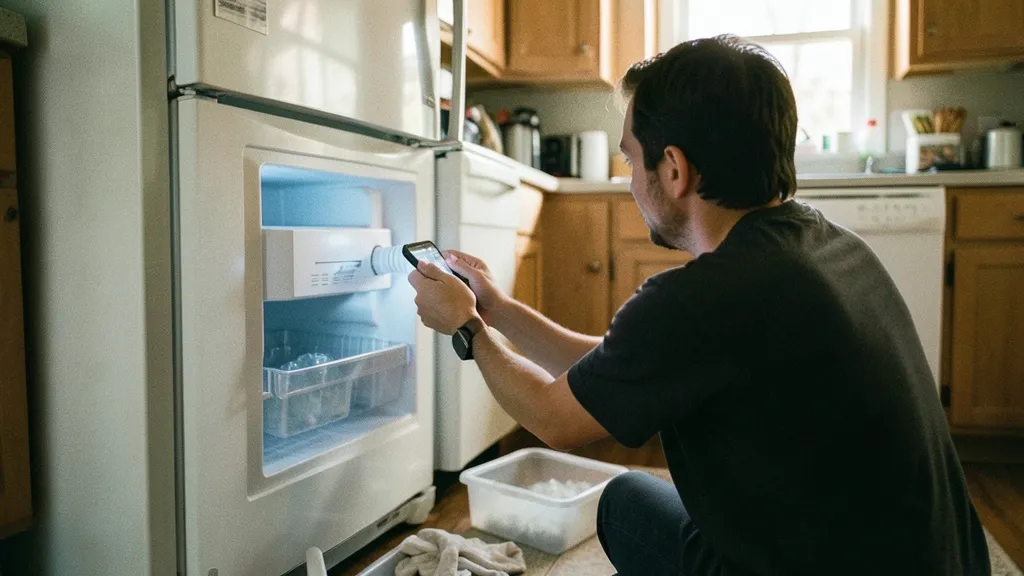
Unplug the refrigerator first, then remove the ice bin and shine a flashlight at the back of the ice maker. Look for these signs:
- A white or clear plug of ice at the fill cup or where the tube meets the ice maker housing.
- Frost coating the tube. A frosted tube with a solid core usually means the water is freezing on its way in.
- A small, misshapen ice slab or tiny cubes in the tray, which suggests the tube is partly blocked and delivering only a dribble.
- An empty tray with no ice anywhere. Check that the wire shutoff arm is down, or the power switch is on, so you aren’t chasing a problem that doesn’t exist.
If you see ice at the inlet, you’ve found your problem.
3. Step-by-step: how to thaw a frozen Whirlpool ice maker fill tube
Hair dryers are safe here as long as you keep the dryer’s cord away from meltwater and the fridge itself is unplugged. Never use a knife, ice pick, or screwdriver to chip the ice. They puncture the thin plastic or crack the ice maker housing, and a new leak costs more than a blocked tube.
- Unplug the refrigerator. Pull the plug from the wall outlet rather than just turning off the ice maker. Water and a live 120V appliance don’t mix.
- Empty the ice bin and lay towels down. Put a towel on the shelf under the ice maker and another on the floor. Meltwater runs down quickly.
- Set the hair dryer to low heat. Plug it into a different outlet, not through an extension cord that crosses wet floor.
- Hold it about 6 inches from the tube and inlet. Warm the area in 2–3 minute bursts, moving the dryer back and forth. Keep it off any one spot, because the plastic should feel warm, never hot.
- Check after each burst. The ice usually loosens or melts within 10–15 minutes total. You may see drips or a small clump of ice fall into the tray.
- Dry everything. Wipe off meltwater from the ice maker, the tube, and the shelf. Standing water refreezes into new ice.
- If the ice is stubborn, stop and let the fridge sit unplugged with the door open for 2–4 hours. Slow thawing beats overheating plastic.
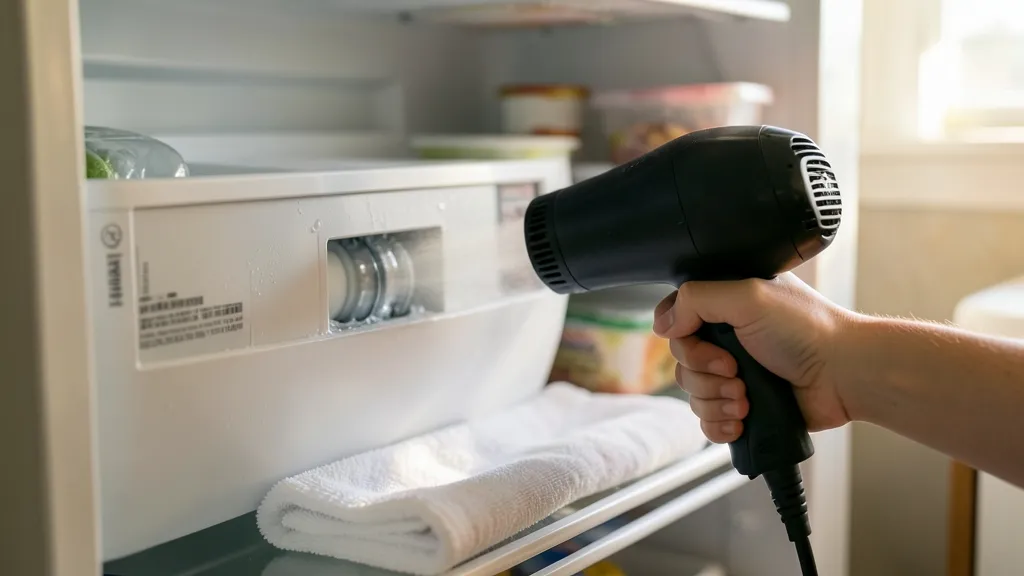
Once everything is clear, put the bin back and plug the fridge in. You can check for flow by pouring about 1/2 cup (4 oz) of water slowly into the fill cup. It should drain through without backing up.
4. Fix what froze it: freezer temperature and water flow
Thawing without fixing the cause means the tube will likely freeze again within days. Work through these in order.
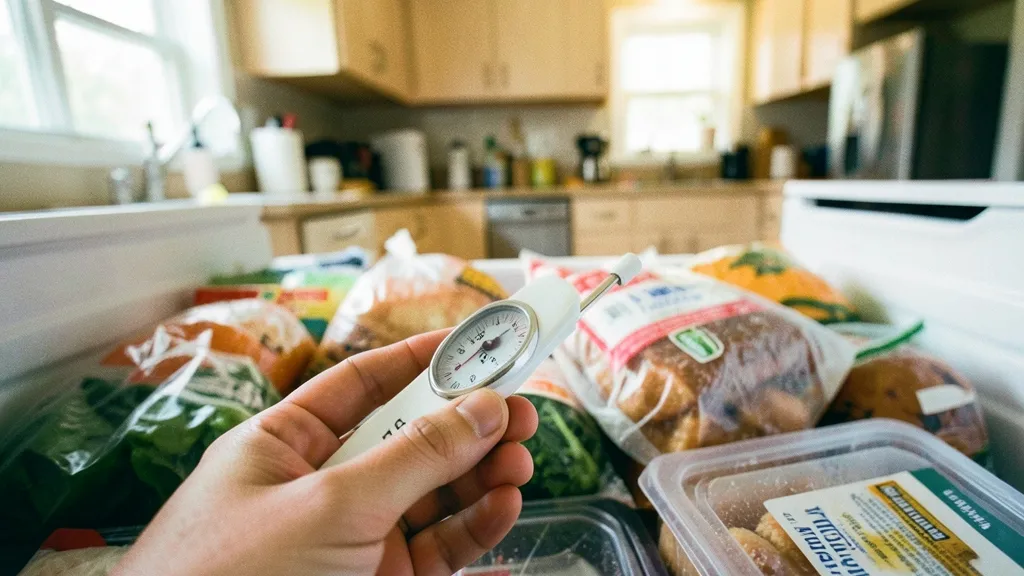
Set the freezer to 0–5°F. Colder isn’t better here. Settings well below 0°F make the ice maker run cold enough to freeze the inlet between fills, while settings above 5°F cause partial thaw-and-refreeze cycles. Use a freestanding appliance thermometer, since the display can be off by a few degrees, and give it 24 hours to settle.
Replace the water filter if it’s past 6 months. A clogged filter is one of the most common reasons for a weak fill. If the dispenser takes noticeably longer to fill a glass than it used to, that’s a hint.
Check the supply valve and house pressure. The shutoff behind or beneath the fridge should be fully open. Many ice makers want roughly 20–120 psi, but confirm the range in your manual. If low flow is a wider problem in your home, the supply checks in our Whirlpool washer F8 E1 low water flow guide apply to the fridge’s supply line too.
Fix the door seal and airflow. Run the dollar bill test on all sides of the gasket. Keep food away from the freezer vents, and make sure the door closes fully, since a door left open even a crack lets in moist air.
Give the ice maker a full day before judging results. The first batch can take 3–4 hours after power returns, and it’s smart to discard the first two or three batches.
5. Quick reference: symptoms, causes, and fixes
| Symptom | Likely cause | What to do |
|---|---|---|
| Dispenser pours water, no ice, ice plug at inlet | Frozen fill tube | Unplug, thaw with hair dryer on low, 6 inches away |
| Tiny or hollow cubes | Partial freeze or low flow | Replace filter, check shutoff valve, thaw tube |
| Tube refreezes within a week | Freezer too warm or leaking gasket | Set to 0–5°F, check door seal |
| Heavy frost across the whole freezer | Possible defrost system issue | Call a licensed technician |
| Tube is clear, freezer is at 0–5°F, still no water to ice maker | Faulty inlet valve or ice maker module | Test further before replacing parts |
For a broader walkthrough covering other no-ice causes, see our Whirlpool ice maker not making ice guide.
6. Common mistakes and how to fix them
- Replacing the water inlet valve too soon. Many people see “dispenser works, ice doesn’t” and order a valve. The dispenser working means the valve is at least partly fine. Thaw the tube, correct the temperature, change the filter, and wait 24 hours first. Replace the valve only if the tube stays clear, flow to the ice maker is still absent, and you’ve ruled out the shutoff and ice maker switch.
- Chipping ice with a knife or screwdriver. It’s tempting when the plug is visible, but it tears the tube or cracks the housing. Use low heat only.
- Using high heat on the hair dryer. Hot air can warp the plastic fill cup and soften the tube. Stay on low and keep moving.
- Setting the freezer as cold as it goes. Extra-cold doesn’t make more ice and often causes this exact problem. Hold it at 0–5°F.
- Skipping the power-off step. Unplug the unit for any work near the ice maker. Just flipping the ice maker’s own switch leaves other parts live.
7. When to call a technician
Stop and call a licensed appliance technician if the fill tube refreezes within 1–2 weeks after you’ve fixed temperature and flow, or if frost is building up across the whole freezer. Those patterns point to a failing defrost system or a sealed-system issue, which isn’t DIY territory. Never attempt anything involving refrigerant.
Rule of thumb: tube first, temperature second, filter third, valve last.
Frequently asked questions
How long does it take to thaw a frozen Whirlpool ice maker fill tube?
With a hair dryer on low held about 6 inches away, most plugs melt in 10–15 minutes of short bursts. Without heat, unplug the fridge and leave the door open for 2–4 hours. After you plug it back in, allow up to 24 hours before judging results.
Why does my Whirlpool ice maker fill tube keep freezing?
Repeated freezing usually comes from low water flow or temperature swings. Check for a filter older than 6 months, a partly closed shutoff valve, a freezer above 5°F, and a worn door gasket. If the tube still freezes within 1–2 weeks after those fixes, have a technician inspect the defrost system.
Can I pour hot water on a frozen ice maker fill tube?
No. Hot or boiling water can crack plastic parts, soak the freezer, and refreeze into more ice. Meltwater also runs toward electrical components. Unplug the refrigerator and use a hair dryer on low heat, or let it thaw slowly with the door open.
You might also like
Hand-picked suggestions based on what you are reading
Whirlpool Washer F8 E1 Code: Low Water Flow Fix Guide
Whirlpool washer F8 E1 code means water is filling too slowly. Check valves, hoses, and inlet screens step by step, and learn when to call a pro.
Electric Water Heater No Hot Water: 7 Checks Before You Call
Electric water heater no hot water? Check the breaker, the red reset button, and the upper element first. Step-by-step safe checks and when to call a pro.
Maytag Dryer Takes Two Cycles to Dry Clothes: 5 Fixes
Maytag dryer takes two cycles to dry clothes? Check the lint screen, vent, exterior flap, moisture sensor, then heating element. Step-by-step fixes inside.