Frigidaire Refrigerator Warm but Freezer Cold: What to Check
Frigidaire refrigerator warm but freezer is cold? Check the air vent, evaporator fan, door gasket, and condenser coils in order, with 37°F and 0°F targets.
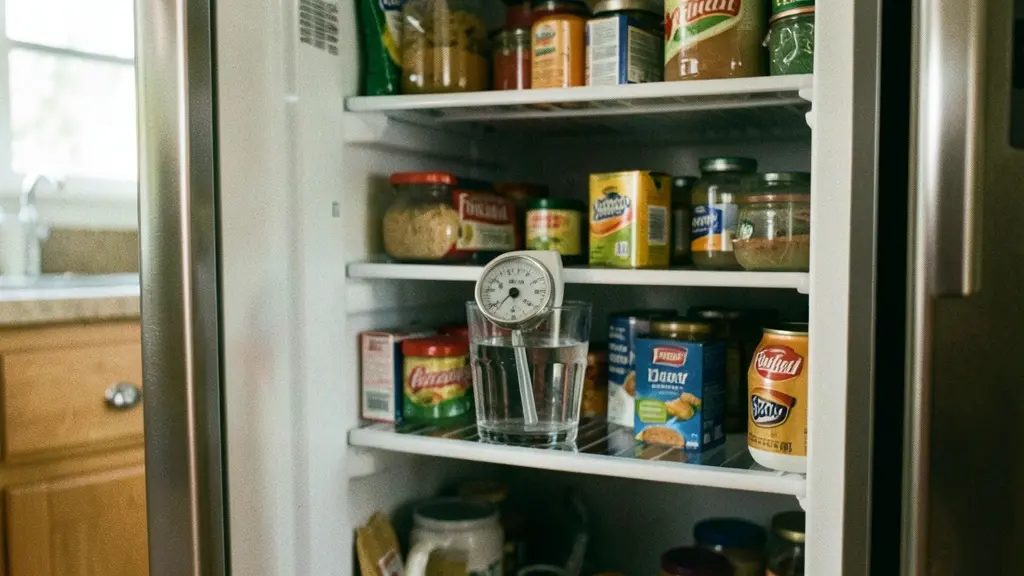
Table of Contents
When a Frigidaire refrigerator is warm but the freezer is cold, cold air usually isn’t reaching the fresh-food section. The most common causes are an ice-blocked air vent, a dead evaporator fan, a leaky door gasket, or dirty condenser coils. Your targets are 37°F in the fridge and 0°F in the freezer, and anything above 40°F for more than 2 hours puts your food at risk.
Most people turn the fridge dial colder, which does nothing when the real problem is airflow. Many fridges blow cold air from the freezer into the fridge through a single vent, so a frosted-over duct leaves the fridge warm. This guide walks you through the checks from easiest to hardest, with a way to measure each result.
1. Why the Freezer Stays Cold While the Fridge Warms Up
Most Frigidaire top-freezer, bottom-freezer, and side-by-side models have one evaporator, and it sits in the freezer. A fan pulls air across the frosty evaporator coils. Some of that cold air is pushed through a vent or duct into the fresh-food side, where a damper controls how much gets in.
That design means the freezer gets first pick of the cold air. If anything chokes the flow, the freezer holds near 0°F while the fridge drifts into the 45–55°F range. Four things cause it, and they’re listed here in the order you should check them:
- Ice in the air vent or duct from a frost buildup
- A weak or dead evaporator fan
- A door gasket that leaks warm room air into the fridge
- Dirty condenser coils that make the whole system work too hard
Core rule: a warm fridge with a cold freezer is almost always an airflow problem, not a thermostat problem. Fix the airflow before you touch the temperature setting.
2. Frigidaire Refrigerator Warm but Freezer Cold: What to Check, Easy to Hard
Start with a baseline. Put a glass of water with an appliance thermometer on the middle shelf of the fridge. Put a second thermometer between frozen packages in the freezer. Keep the doors closed for 24 hours, then read both. You’re looking for 35–38°F in the fridge and 0°F (or slightly below) in the freezer.
Step 1: Clear the Air Vent and Look for Ice
Pull food away from the vents on the back wall or ceiling of the fridge. Leave at least 1–2 inches of open space around them. A bag of salad pressed against a vent blocks airflow as well as ice does.
Then look closely at the vent and the freezer’s back wall. White frost, ice crust, or a slushy buildup means the air path is blocked. Here is how to clear it:
- Unplug the refrigerator (standard 120V outlet) and move perishables to a cooler with ice.
- Remove the shelves, then leave both doors open for 8–24 hours. Lay towels on the floor, since meltwater runs out.
- To speed it up, hold a hair dryer on low at least 6 inches from the ice. Keep it moving so the plastic liner doesn’t warp.
- Wipe everything dry, plug the unit back in, and wait 24 hours before reading the thermometers.
Never chip ice with a knife or ice pick. The refrigerant lines sit close behind these walls, and a puncture is not a DIY repair.
If the ice grows back within a few weeks, the cause is deeper than a one-time clog. Water that can’t leave the defrost drain freezes into the same blockage, so check the steps in clearing a clogged refrigerator defrost drain.
Step 2: Test the Evaporator Fan
The fan sits behind a panel on the freezer’s back wall. Plug the fridge in and close the doors. Put your ear near the back of the freezer. You should hear a soft whir. Squealing, ticking, or dead silence points to the fan.
You can also test it by hand. With the unit unplugged, remove the freezer shelves and ice bin, then take out the panel screws (usually a 1/4-inch nut driver or a Phillips screwdriver). Spin the blade with a finger. It should turn freely.
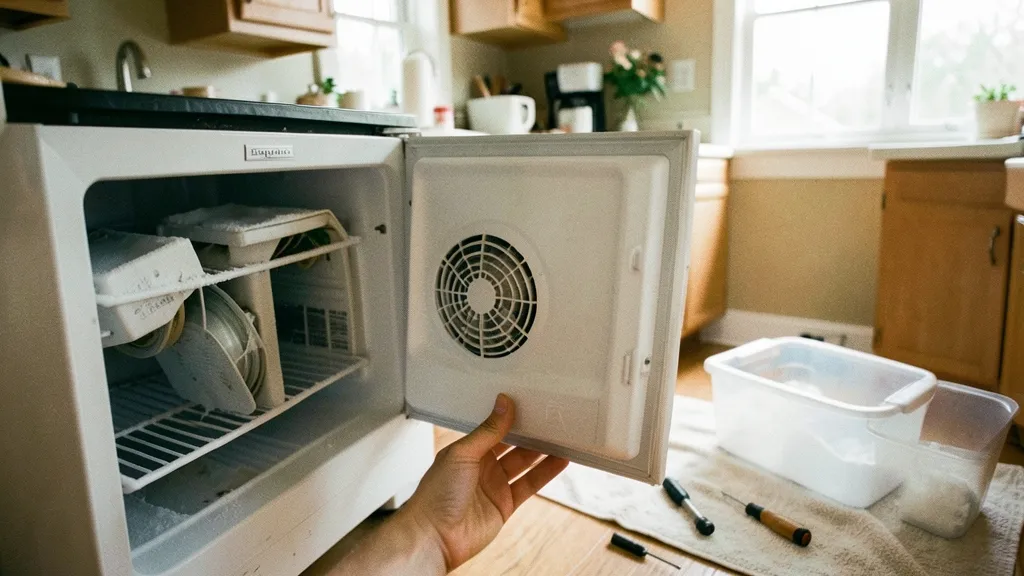
Here is what you may see behind the panel:
- Blade frozen in ice: defrost it fully (Step 1), then retest.
- Blade spins but is silent or slow once powered: the fan motor is failing, and a replacement motor is a common DIY part. Match it to your model number, found on the sticker inside the fridge.
- Thick frost over the whole coil: the defrost system (heater, thermostat, or control board) has stopped working. Defrosting by hand will only buy you a few weeks.
Keep your hands out of the fan area whenever the unit has power.
Step 3: Check the Door Gasket
A worn gasket mostly hurts the fridge, because the fridge is where warm kitchen air sneaks in. Try the dollar bill test: close the door on a bill and tug it out. Do this at four spots, both sides and top and bottom. If it slides out with no resistance in any spot, the seal is leaking.

Wash the gasket with warm water and a drop of dish soap, and dry it well. Sticky residue keeps it from sealing. A folded or flattened section can often be coaxed back into shape with a hair dryer on low. Also check that the fridge sits slightly tilted back so the doors swing shut on their own. If the gasket is cracked or torn, replace it.
Step 4: Clean the Condenser Coils
Dusty coils usually warm both compartments, but a fridge in a hot kitchen or garage may show it in the fresh-food side first. Look for a compressor that runs almost nonstop and warm air from the bottom grille.
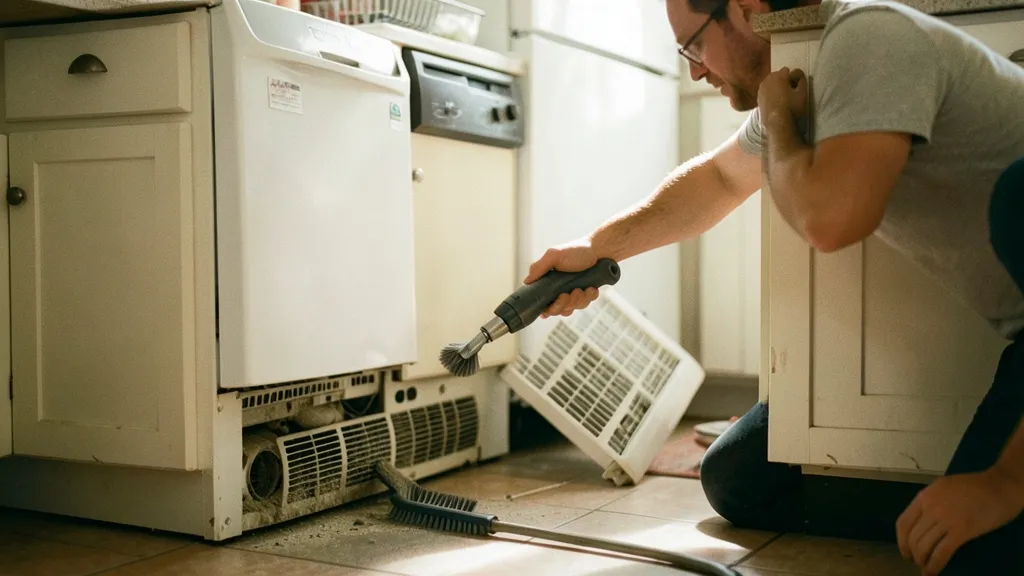
Unplug the unit, pop off the bottom kick grille (it snaps off on most models), and vacuum the coils with a brush attachment. A long, thin coil brush reaches the back. Do this twice a year, or every 3 months with shedding pets.
Step 5: Know When to Call a Technician
Stop and call a licensed appliance technician if the coils and gasket are clean, the vent is clear, and the fan runs, yet the fridge still won’t cool. The same goes for a compressor that clicks on and off or runs hot without cooling, or a defrost system that keeps freezing up. Those faults can involve the sealed system or the control board, and handling refrigerant is not a DIY job.
3. Quick Reference: Symptom, Cause, Fix
| What you see | Likely cause | What to do |
|---|---|---|
| Frost or ice on the fridge vent, freezer cold | Blocked air path | Defrost 8–24 hours, clear food away from vents |
| No airflow at freezer vents, no fan sound | Evaporator fan motor | Inspect the fan, replace the motor if it won’t spin |
| Thick frost on the freezer back wall that returns in weeks | Defrost system fault | Check the drain, then call a tech or replace the defrost parts |
| Frost or moisture around the door, warmth near the door | Leaky gasket | Dollar bill test, clean, reshape, or replace |
| Compressor nonstop, dusty bottom grille | Dirty condenser coils | Unplug, vacuum coils |
| Both sections slowly warming, compressor odd or hot | Possible sealed system issue | Stop DIY, call a technician |
If your ice maker has also slowed down, the freezer may be struggling to hold temperature. The Whirlpool ice maker troubleshooting guide covers the same freezer-temperature checks for ice production.
4. When the Food Has to Go
Food safety rules don’t care how close you are to a fix. The USDA’s guidance is that perishable food above 40°F for more than 2 hours should be thrown out. That drops to 1 hour when the room is above 90°F.
| Situation | What to do |
|---|---|
| Fridge above 40°F for less than 2 hours | Move food to a cooler with ice, keep it at 40°F or below, and keep fixing |
| Fridge above 40°F for 2 hours or longer | Discard milk, meat, poultry, fish, cooked leftovers, cut fruit, and deli items |
| Hard cheese, condiments, whole uncut produce | Usually fine, so check the smell and texture |
| Freezer food still has ice crystals or feels as cold as a refrigerator | Safe to keep or refreeze |
| Freezer food thawed and above 40°F for 2+ hours | Discard |
If you can’t tell how long the fridge has been warm, treat it as over 2 hours. Don’t judge by smell, since bacteria that cause illness often don’t change how food smells.
5. Common Mistakes and How to Avoid Them
- Turning the fridge dial to the coldest setting. It won’t force more air through a blocked vent, and it can make the freezer colder and frost heavier. Fix the airflow, then set the fridge to 37°F.
- Stuffing food against the vents. Keep 1–2 inches clear around every vent, especially after a big grocery run.
- Trusting the display instead of a thermometer. A control panel shows a target, not the real air temperature. Use a separate thermometer and check it after 24 hours.
- Defrosting once and calling it fixed. If ice comes back within 2–4 weeks, the defrost system or drain is failing. Defrosting only resets the clock.
If you also own a Samsung, its frost-related error codes work on a similar principle, and the same defrost logic is explained in why a Samsung 22E error keeps returning after defrost.
6. Your Next 24 Hours
- Place the two thermometers and note the starting readings.
- Move food off the vents and look for ice.
- If you see frost, unplug and defrost for 8–24 hours.
- After restarting, wait 24 hours, then read the thermometers: 37°F fridge, 0°F freezer.
- If the fridge is still above 40°F, test the fan and gasket, clean the coils, and call a technician if nothing helps.
Frequently Asked Questions
Can dirty condenser coils cause a warm fridge with a cold freezer?
They can, though they usually warm both sections. Clogged coils make the compressor run longer to shed heat, and in a hot kitchen or garage the fresh-food side may drift above 40°F first. Cleaning the coils twice a year costs nothing and is worth doing, but check the vent and fan first.
How long until my Frigidaire gets cold again after defrosting?
After a full defrost and restart, the fridge usually drops below 40°F within about 4–8 hours. Give it a full 24 hours before judging, and don’t load it with warm groceries or open the doors often during that time. If it’s still warm after 24 hours, move on to the fan and gasket checks.
How do I tell a bad evaporator fan from a defrost problem?
A bad fan gives you no airflow and little or no sound, with only light frost on the coils. A defrost problem usually shows a thick blanket of frost across the coils and back panel, and the fridge warms again within weeks of defrosting. A fan that’s frozen in ice can look like either, so thaw it first.
You might also like
Hand-picked suggestions based on what you are reading
LG Dryer nP Code but Breaker Not Tripped: What to Check
LG dryer showing nP but the breaker isn't tripped? See how a double breaker fails halfway, how to reset both poles, and when to call an electrician.
How to Clean a Dryer Vent Safely: 10-Step DIY Guide
Learn how to clean a dryer vent safely in about 60 minutes with a brush kit and vacuum. Step-by-step, with airflow tests and when to call a pro.
Dehumidifier Running but Not Collecting Water: 7 Fixes
Dehumidifier running but not collecting water? Check coil frost, a dirty filter, and room temps under 65°F first. Step-by-step fixes and when to replace it.