How to Clean a Dehumidifier Coil and Filter (Step by Step)
Learn how to clean a dehumidifier coil and filter in about 30 minutes with a vacuum, soft brush, and dish soap. Restore water pull and airflow today.
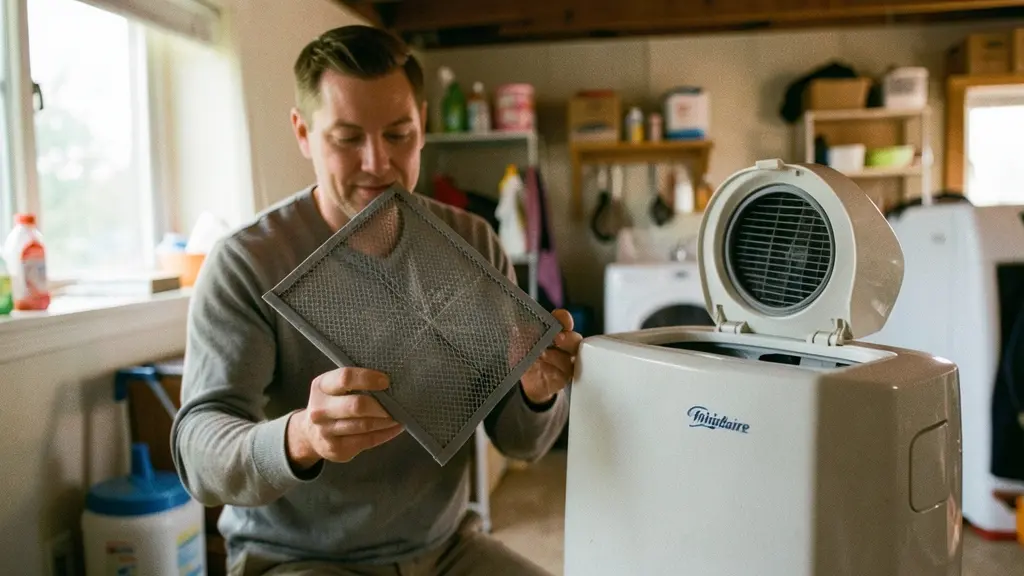
Table of Contents
To clean a dehumidifier coil and filter, unplug the unit, wash the filter in warm water with a few drops of dish soap, then vacuum the coils with a soft brush attachment and let everything dry completely before you plug it back in. The whole job takes about 30 minutes. Plan on washing the filter every 2 weeks in heavy-use months and cleaning the coils every 3 to 6 months.
Most people only rinse the filter, if they do anything at all. The coils sit behind it, and a thin layer of dust and lint on the fins is what makes a unit run all day, pull less water, or frost over. This guide covers both parts, with the safety limits for a sealed appliance.
It applies to standard compressor-style dehumidifiers from brands like Frigidaire, GE, LG, and Midea. These are the 20 to 50-pint portable units common in US basements. Desiccant models work differently and aren’t covered here.
1. Why a dirty filter and coil make your dehumidifier underperform
A dehumidifier pulls room air across a cold evaporator coil. Moisture condenses on the fins and drips into the bucket, and the air then passes over a warm condenser coil and goes back into the room. Anything that blocks airflow cuts that process short.
Dust is the usual culprit. Basements collect lint, pet hair, and drywall or concrete dust, and the filter catches most of it. Once the filter loads up, the fins behind it start to gray over.
The symptoms are easy to spot:
- Longer run times with the humidity reading barely dropping (for example, stuck at 60% when you set it to 45%).
- Less water in the bucket than the same unit collected earlier in the season.
- Frost or ice on the coil, because weak airflow lets the coil get too cold.
- Warm, weak exhaust air or a louder fan.
Cleaning isn’t a cure-all. If the coils are clean and the unit still isn’t collecting water, there may be a different fault, such as a failed humidity sensor or a sealed-system problem. See dehumidifier running but not collecting water for that diagnosis.
2. Tools and safety before you open the cabinet
Gather everything first so the unit isn’t sitting open while you hunt for a screwdriver.
- Vacuum with a soft brush attachment
- Soft paintbrush (about 2 inches wide) or a soft-bristle toothbrush
- Phillips screwdriver, plus a flashlight
- Fin comb (optional, sold at hardware stores for AC coils)
- Dish soap, a bucket or sink, and towels
- Compressed air (optional, short bursts only)
Safety rule: Unplug the dehumidifier from the wall before you touch the filter housing or remove any panel. Don’t rely on the power button. Dehumidifiers run on standard 120V, and the fan and compressor can start without warning.
The coil fins are thin aluminum and edges can cut your fingers, so work gently and wear light gloves if you have them. The coil tubing is part of a sealed refrigerant system. Never bend the tubes, poke the fins with a screwdriver, or use anything that could puncture them. If you see oily residue on the tubing or a damaged tube, stop and call a licensed appliance technician.
If the coil is frosted, unplug the unit and let it thaw for 1 to 2 hours with the bucket in place. Don’t chip ice off with a tool.
3. How to clean a dehumidifier filter (5 to 10 minutes)
- Unplug the unit and remove the water bucket. Empty it.
- Slide out the filter. On most models it sits behind a rear or side grille, either pulling straight out or releasing with a small tab. Check your owner’s manual if you can’t find it.
- Vacuum off the loose dust first, while the filter is dry. This keeps the rinse water from turning into gray mud.
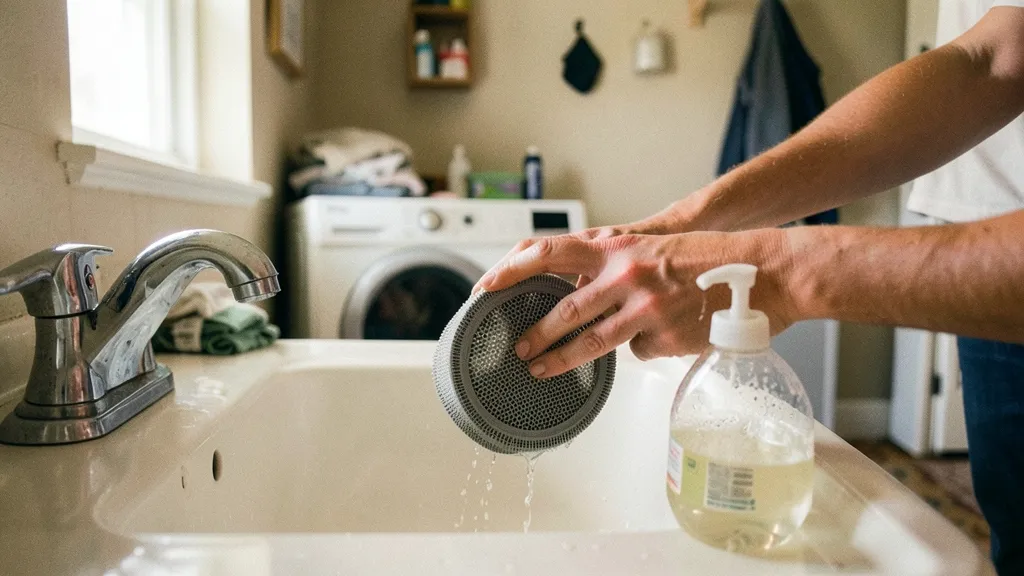
- Wash it in warm water (not hot, since hot water can warp plastic frames) with a few drops of mild dish soap. Swish it for about 30 seconds and rub gently with your fingers.
- Rinse until the water runs clear, then shake off the excess.
- Air dry it completely. Leave it on a towel for 30 to 60 minutes. A damp filter holds moisture and can smell musty.
Don’t run the dehumidifier without a filter while you wait. Dust goes straight onto the coil. If you need the unit running, wash the filter early in the day and let it dry while you do the coil.
Replace the filter if the mesh is torn, stiff, or permanently stained after washing. Many models list a replacement part number on the filter frame or in the manual.
4. How to clean a dehumidifier coil (15 to 20 minutes)
Most evaporator coils are visible once the filter is out. Condenser coils and the full evaporator may need a rear panel or the whole cabinet shell removed. Check the manual first. If the shell is held by 4 to 8 screws, removing it is straightforward for most homeowners. If you find clips, wiring, or anything you aren’t comfortable with, clean what you can reach and leave the rest.
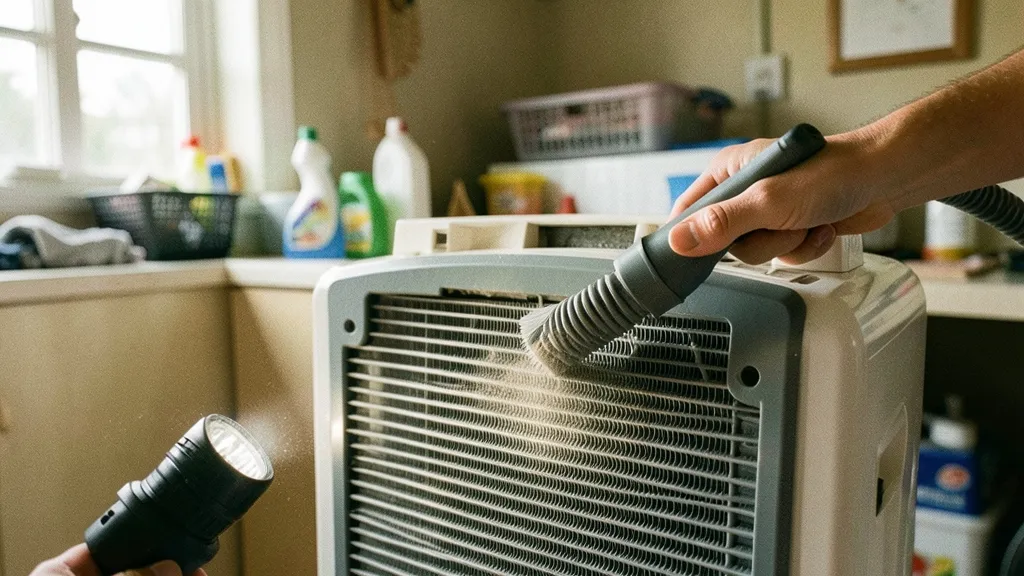
- Look with a flashlight. Shine it through the fins from behind. Solid gray fuzz means it needs cleaning.
- Vacuum the fins with the brush attachment. Move in the same direction as the fins, usually vertical, using light strokes. Pressing across the fins bends them.
- Loosen stubborn dust with a soft brush. Brush along the fins, then vacuum again.
- Use compressed air sparingly. Short bursts from at least 6 inches away, blowing from the clean side toward the dirty side so dust doesn’t get packed deeper.
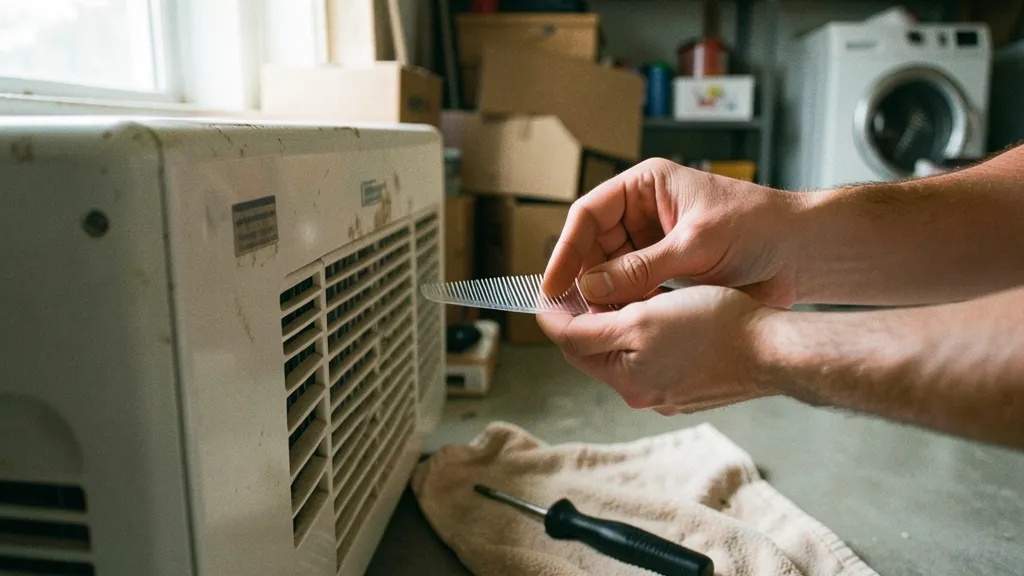
- Straighten bent fins. If a section looks flattened, use a fin comb that matches the fin spacing and slide it through gently. Cosmetic bends don’t matter, but large flattened patches block airflow.
- Wipe the surrounding area. Vacuum the fan blades, intake grille, and cabinet bottom. Dust here ends up back on the coil.
Skip the household spray cleaners, bleach, and foaming coil cleaners meant for AC units. They can corrode thin aluminum or leave residue that drips into the bucket and the pump. For heavy grime, a barely damp soft cloth wiped along the fins is the furthest most DIYers should go.
Before you reassemble, wipe the water bucket with a solution of 1 tablespoon of white vinegar per cup of water, or 1 tablespoon of bleach per gallon of water. Rinse thoroughly and dry it. This stops the slimy film that causes musty odor. Never mix bleach and vinegar.
Reinstall the dry filter, close the cabinet, plug in the unit, and run it for 15 to 20 minutes. You should feel stronger airflow and see the humidity reading start to drop.
5. Cleaning schedule and quick troubleshooting table
Frequency depends on where the unit lives. A dehumidifier in a finished basement with carpet and pets needs more attention than one in a bare concrete crawlspace.
| Situation | Filter | Coils | Bucket |
|---|---|---|---|
| Heavy use (summer, basement, running daily) | Every 2 weeks | Every 3 months | Weekly |
| Moderate use (a few hours a day) | Monthly | Every 6 months | Every 2 weeks |
| Pets, construction dust, or smokers in home | Every 1 to 2 weeks | Every 2 to 3 months | Weekly |
| Before storing for winter | Wash and dry | Clean and dry | Clean and dry |
If you’ve cleaned everything and something still seems off, use this quick check:
| Symptom after cleaning | Likely cause | What to do |
|---|---|---|
| Still frosting up | Room below roughly 65°F, or restricted airflow | Move the unit to a warmer spot, keep 12 inches of clearance on all sides |
| Runs but bucket stays nearly empty | Humidity already low, or sensor or sealed-system fault | Check room humidity with a separate hygrometer and see the diagnostic link above |
| Fan runs, no cooling | Compressor or refrigerant problem | Call a licensed technician |
| Musty smell | Residue in bucket or damp filter | Re-wash the bucket and dry the filter fully |
If your laundry area shares the same basement, lint from the dryer can load the filter faster. A clear exhaust path helps, so check how to clean a dryer vent safely if your filter looks fuzzy every week.
6. Common mistakes and fixes
- Cleaning the filter but ignoring the coil. Dust that slips past an old filter ends up on the fins. Fix it by checking the coil with a flashlight at least once per season.
- Using high-pressure water or a garden hose. This bends fins and can soak the fan motor and electronics. Stick with dry cleaning methods.
- Reinstalling a damp filter. The unit can smell musty and grow mildew. Dry it fully, or keep a second filter on hand if the model has a common size.
- Running the unit in a cold space. Below about 65°F, many compressor dehumidifiers frost up no matter how clean they are. Check the manual for the minimum operating temperature.
- Blocking airflow. Placing the unit against a wall or stored boxes cuts efficiency. Leave roughly 12 inches of open space around the intake and exhaust.
Set a recurring phone reminder for the first of each month from May through September. Wash the filter, check the coil with a flashlight, and empty and wipe the bucket. Five minutes a month usually keeps the unit running as it did when new.
Frequently asked questions
How often should I clean my dehumidifier filter and coil?
Wash the filter every 2 weeks if the unit runs daily, or monthly with lighter use. Clean the coils every 3 to 6 months. Dusty homes with pets or ongoing renovation may need both done more often.
Can I use vinegar to clean dehumidifier coils?
Skip it on the coils. Vinegar and other acids can corrode thin aluminum fins. Use a soft brush and vacuum for the coils. A diluted vinegar solution, about 1 tablespoon per cup of water, is fine for the water bucket, followed by a thorough rinse.
Why is my dehumidifier coil still icing up after cleaning?
The most common reason is a room that is too cold, since many units frost below about 65°F. Blocked airflow, a failing fan, or low refrigerant can also cause it. If cleaning and a warmer location don’t help, have a licensed technician check the sealed system.
You might also like
Hand-picked suggestions based on what you are reading
How to Clean a Dryer Vent Safely: 10-Step DIY Guide
Learn how to clean a dryer vent safely in about 60 minutes with a brush kit and vacuum. Step-by-step, with airflow tests and when to call a pro.

How to Replace a Whirlpool Refrigerator Water Filter
Learn how to replace a Whirlpool refrigerator water filter in about 5 minutes, spot a restricted filter, and flush trapped air so the dispenser runs clean.
Bosch Dishwasher E24 Error: How to Clean the Drain Pump
Bosch dishwasher E24 error? Cut power, clean the filter and drain pump, check the hose and disposal knockout plug, and learn when to call a pro. Start here.